If you are seeing dents, wavy seams, or “ghost lines” after drywall is hung, it usually starts before paint ever touches the wall. This guide walks you through what should happen during drywall installation, repair, and finishing so your walls look straight and stay that way in Allen, TX.
After a repair or a remodel, it is common to notice that the wall does not look “clean” even when the paint color is right. You might see seams that telegraph through, small ridges near corners, or a surface that feels slightly uneven with your hand.
In Allen, TX, where many homes include older drywall patches alongside newer construction, the problem is often a mix of installation gaps, inconsistent joint treatment, and finishing steps that do not match the wall conditions. This guide helps you understand how drywall installation should be handled, what to check before paint, and what to ask for when you need drywall services.
Quick Answer
Flawless walls usually come from correct drywall installation first, then careful drywall repair and finishing before paint. Start by checking that boards are properly fastened, seams are aligned, and corners are treated cleanly. After that, confirm the joint work is consistent: backing and patch edges should be solid, compound should be feathered, and the final sand should produce a uniform surface with no ridges. If you are planning interior painting, schedule drywall finishing so the wall texture is ready to prime and paint, not “fixed” after the fact.
What to Check First
Before you worry about paint sheen or color, check the drywall itself. The goal is to catch issues early, when they are easier and cleaner to correct.
- Fastener and seam consistency: Are screws set properly (not popping through later) and are seams straight instead of staggered?
- Edges and patch transitions: Do repaired areas blend smoothly into the surrounding wall, or do you feel a step when you run your palm across?
- Corner quality: Are inside and outside corners crisp, or do they look rounded and uneven?
- Dryness and readiness: Is the compound fully cured and sanded uniformly, without shiny spots that can indicate uneven coverage?
Professional observation: The most noticeable “defects” after paint are rarely paint problems. They are usually seam ridges, poor feathering, or patch edges that were not built up and sanded consistently.
Main Things Customers Should Understand
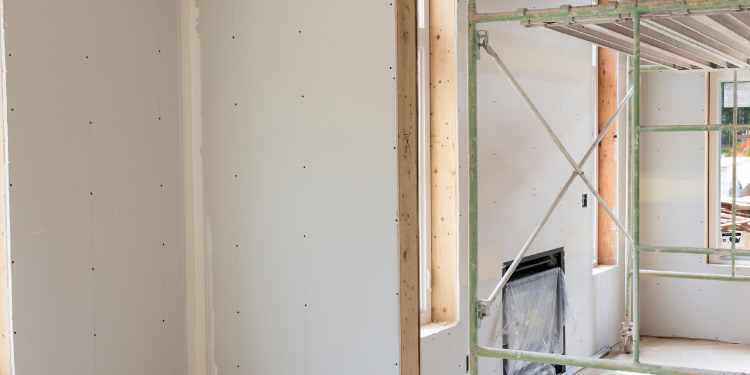
Drywall installation is more than hanging boards. The wall only looks good after the whole system works together: framing alignment, board fastening, joint treatment, and drywall finishing.
1) Drywall installation basics
Boards should be cut to fit, aligned at seams, and fastened so the surface stays flat. When boards sit slightly proud or behind framing, seams and dents show up later, especially under side lighting.
2) Drywall patching and repair
For drywall repair, the patch edges must be supported and feathered. If the underlying support is weak or the patch transition is too abrupt, you will feel and see the line through primer and paint.
3) Drywall finishing for paint readiness
Finishing is where you get the uniform plane. Proper sanding and consistent compound build-up reduce “ghosting” at seams and help your interior painting look smooth from every angle.
If you are also working on other interior surfaces, it helps to keep the workflow coordinated. For example, if you plan to update trim or paint adjacent areas, drywall finishing should happen first so you do not have to rework edges later.
MJ Workforce Solutions also supports related finishing work, including drywall services for repairs and installs that need to disappear into the surrounding wall.
Why This Matters in Allen, TX
In Allen, TX, many homes mix drywall generations. You might have an older section with previous patching alongside newer work from a renovation. That makes it especially important to match the finish level so seams and repairs do not stand out after interior painting.
One more practical factor: lighting. Rooms with brighter overhead lighting or windows that create side glare will reveal even minor ridges. That is why drywall finishing and sanding consistency matter before you start painting or refinishing other surfaces.
Local planning tip: If you are staging furniture or preparing a room for listing or move-in, time drywall finishing to come before interior painting and any texture-sensitive work. It helps you avoid redoing paint touch-ups on a wall that still needs sanding and build-up.
Common Mistakes to Avoid
Most “bad wall looks” happen after the drywall is already installed. These are the mistakes customers in Allen, TX most often run into.
| Common issue | What it looks like after paint | Why it happens | What to do instead |
|---|---|---|---|
| Unaligned seams | Seam lines that look like a faint stripe | Boards not aligned or framing not accounted for | Confirm board alignment and joint plan before compound work |
| Too-thin joint build-up | Ridges you can feel, even if they look “small” | Compound not applied in a consistent, feathered system | Use proper drywall patching build-up and feathering steps |
| Skipping prep and surface preparation | Shiny spots or uneven texture under primer | Inconsistent sanding or unfinished transitions | Finish sanding to a uniform surface before priming services |
| Rushing to paint | Seams reappear or edges look raised | Compound not fully cured or not properly smoothed | Let compound cure and confirm smoothness before interior painting |
If your project includes ceiling texture removal or other surface changes, coordination matters. For example, if you are dealing with popcorn texture, you will want the drywall plane and finishing ready before you move on. MJ Workforce Solutions can help with popcorn texture removal in Allen so the finish level is consistent.
Customer Checklist
Use this checklist before you approve the drywall installation, patching, and finishing step. It is designed for homeowners, property managers, and anyone preparing a room for paint.
- Confirm boards are firmly fastened with no flex when you press lightly.
- Check seams and patched areas for straight alignment and smooth feathering.
- Run your hand across the wall and corners to feel for ridges or steps.
- Inspect under strong light from an angle, not only from the doorway.
- Look for consistent texture across the repaired and original sections.
- Verify the surface is ready for priming services and caulking and sealing at transitions.
- Coordinate the schedule so drywall finishing is completed before interior painting.
A representative (anonymized) scenario
A homeowner in Allen, TX had a section of drywall replaced after a plumbing issue. The wall was painted quickly to match the rest of the room. A few weeks later, the repaired area showed a faint seam line and a slight ridge near the corner. The fix was not another coat of paint. It required reworking the drywall patching build-up, sanding it flatter, and then prepping the surface properly for primer and paint.
This is a common pattern: when drywall finishing is rushed, paint can only highlight what is already there. When installation, patching, and finishing are done as a system, the wall stays visually uniform.
Get your drywall plan organized before paint
MJ Workforce Solutions can help you plan drywall installation, drywall repair, and drywall finishing so your interior painting work looks clean in Allen, TX.
Call MJ Workforce Solutions at (945) 253-0961Frequently Asked Questions
How can I tell if drywall finishing problems are coming from installation or patching?
Installation problems usually show up as broader flatness issues, like waves or areas that feel “off” across a larger section. Patching problems often show up as localized ridges, seam-like lines, or corner transitions that are noticeable from certain angles. The fastest way to tell is to compare texture and smoothness across the repaired area and the surrounding wall using side lighting, then feel the surface with your hand. If ridges are concentrated around the patch perimeter, it is typically patching and feathering rather than the entire installation.
What should be done before interior painting if I have drywall seams that keep showing?
If seams keep showing, the wall is usually not smooth enough for primer and paint to sit evenly. That means the right sequence is drywall finishing first: confirm the seam work is built up and feathered, then sand to a uniform surface. After that, surface preparation matters, including making sure transitions are ready for priming services. Painting too early can lock in ridges and make “ghost lines” more visible, especially in brighter rooms or where sunlight hits at an angle.
Do I need drywall repair only, or full drywall installation?
It depends on how much wall surface is affected and whether the framing and board alignment are still solid. Small localized damage often calls for drywall patching and repair. Larger areas, repeated failures, or sections where boards were not installed flat may require drywall installation work to reset the wall plane. A practical approach is to assess where the wall deviates from straight and where the ridges concentrate. If the issue tracks only the damaged section, repair is often the best starting point.
Will drywall texture or sanding differences make the wall look uneven later?
Yes. Even if the joint line is technically “filled,” inconsistent sanding can leave subtle texture differences that show after paint. This is why drywall finishing is about creating one continuous surface. When you inspect under angled light and feel the wall, you can detect unevenness early. If the repaired area has a different smoothness level than the original drywall, primer and paint can highlight the contrast. Coordinating drywall finishing before painting is the best way to avoid these issues.
Can drywall finishing affect other projects like wallpaper installation or removal?
Absolutely. Wallpaper installation and wallpaper removal both rely on a wall surface that is consistent and well-prepped. If drywall seams, ridges, or patch edges remain uneven, they can show through the wallpaper or cause edges to lift over time. If you are planning wallpaper work, it is smart to handle drywall finishing first. MJ Workforce Solutions also supports wallpaper-related services, including wallpaper installation and wallpaper removal in Allen, so the surface prep and final finish work can be coordinated.
Ready for smooth, paint-ready walls in Allen?
When drywall installation, drywall repair, and drywall finishing are handled as one process, you get fewer surprises after paint. If your walls have seams that keep showing or patches that do not blend, contact MJ Workforce Solutions.
Explore drywall services