
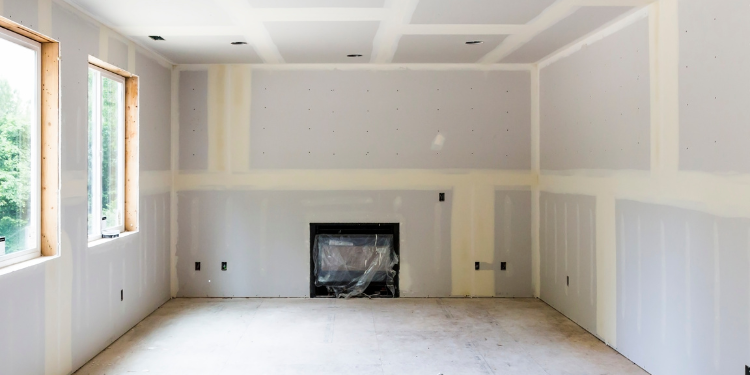
If you are noticing wavy seams, soft edges at corners, or “telegraphing” after painting, the issue usually starts with how the drywall was installed and finished. This guide walks you through what to look for in drywall installation and finishing so your walls stay clean, flat, and ready for a sharp interior paint job in Allen, TX.
You run your hand along the wall after a renovation, and it feels fine in the middle. Then you catch the light at a corner and suddenly you see it: a rounded edge, a visible seam, or a patch that looks slightly “off” once paint goes on.
In Allen, TX homes and remodels, that mismatch shows up often because drywall gets installed around older trim, new openings, or repairs where the wall surface was never truly continuous. The good news is that crisp corners and smooth texture are achievable when the drywall installation and finishing steps are done in the right order.
This guide helps you understand what “quality drywall installation” looks like, what to check before paint, and which common mistakes cause that frustrating, uneven finish you can see under indoor lighting.
Quick Answer
For crisp corners and smooth texture, quality drywall installation is only half the job. The other half is how the seams and edges are treated: proper board placement, secure attachment, correct joint compound build-up, and careful sanding before paint. Before any interior paint, inspect corners and seams in bright, angled light. If you can see ridges or feel edges with your fingertips, ask for the surface to be finished again and re-checked. A practical next step is to review your project scope with a team that also handles Drywall Services so installation and finishing match your final paint plan.
What to Check First
Before you approve the drywall work, focus on the spots that reveal workmanship once paint and trim are installed. These checks help you catch issues early, when they are easier to fix.
Corner sharpness
Look at inside and outside corners from multiple angles. Sharp corners should feel clean, not rounded.
Seam visibility
Use a flashlight at a low angle. Seams should not create a “shadow line.”
Texture consistency
After sanding and finishing, the wall should feel uniform across the repaired and newly installed areas.
If your project includes openings, such as doorways or window trim changes, also check around those edges. Drywall transitions near cutouts often show the most movement and unevenness after painting.
Professional observation: When homeowners see “smooth in one room, not smooth in another,” it is often because the drywall finishing approach changed between areas. Consistent installation and joint finishing are what keep the texture from looking patchy.
Main Things Customers Should Understand
Crisp corners and a smooth texture come from a coordinated set of steps. Here are the main factors you can ask about, observe, and plan around for an interior-ready finish.
1) Board placement and how seams line up
Where seams land matters. Well-aligned panels help the joint compound build evenly and reduce visible ridges. For outside corners, the edge needs support so it does not chip or soften under sanding.
2) Fastening and flatness control
Drywall that is secured correctly tends to stay flatter during finishing. If boards flex slightly, seam work can end up “wavy,” and sanding will not fully correct it.
3) Joint compound build-up, not just quick patching
Most customers notice problems after paint, but they start during finishing. Smooth results require proper layering and time for each stage to set, then controlled sanding so you eliminate ridges without over-thinning the surface.
4) Texture planning before you start painting
If your wall currently has a particular texture, new drywall must be finished to match. Otherwise, the new area catches light differently, even if it looks “smooth” at first glance.
5) Surface preparation before coating
Even the best drywall finish can look uneven if dust or residue remains. Surface prep and cleaning matter, especially before an interior paint sheen is applied.
Why This Matters in Allen, TX
Allen, TX experiences real seasonal swings in temperature and humidity. In many homes, drywall and interior surfaces also shift slightly over time, which can make seams and edges more noticeable. That is why the goal is not only “repair it,” but “make it blend.”
In older Allen properties and in remodels around existing trim, drywall often meets surfaces that do not align perfectly. Good drywall installation and finishing create the continuous plane you need so later coatings and trim painting look intentional instead of patched.
Local tip: If your walls are getting repainted after repairs, inspect them with lights on in the evening. The angled household lighting in living areas and hallways can reveal seam shadows that daytime inspection misses.
| What you notice on the wall | Most likely root cause | What to ask for next |
|---|---|---|
| Seam line shows after paint | Uneven joint build-up or insufficient blending at the seam | Re-check sanding and seam finishing, then re-test in angled light |
| Corners look rounded | Edges not supported or not finished to a crisp profile | Confirm corner finishing plan for outside and inside corners |
| New drywall area feels different | Texture mismatch or inconsistent finishing thickness | Match texture and finish level across the repair zone |
| Patch area “ghosts” under sheen | Surface prep missed, dust left behind, or inconsistent smoothness | Surface prep review before coating and final paint |
Common Mistakes to Avoid
These are the issues we most often see when a drywall installation looks good at first, then disappoints after paint and trim go in.
- Approving corners before they are checked in angled light. Flat walls can still hide edge problems until lighting changes.
- Skipping texture matching. A “smooth” patch is not the same as a “matching” patch when light hits different textures.
- Rushing the finishing stages. If compound layers are not given the time they need to set and stabilize, the sanding process will not produce a lasting smooth surface.
- Painting over dust. Dust and residue can affect how coatings lay down and can make seams look more obvious.
- Assuming all drywall repairs are the same. A small drywall patch has different finishing needs than a larger installation section with multiple seams.
Want your drywall finish to blend before paint?
If you are planning an interior refresh in Allen, TX, getting drywall installation and finishing right first can save a lot of rework later. MJ Workforce Solutions can coordinate Drywall Services so your surface is ready for the next step.
(945) 253-0961Customer Checklist
Use this quick checklist when the drywall work is finished and you are ready to move toward paint. It is designed to help you catch issues while they are still practical to correct.
- Inside and outside corners look crisp from multiple angles.
- Seams do not create a visible shadow line under angled light.
- The repaired area matches the surrounding texture to the eye and to the touch.
- Edges around openings feel smooth and consistent, not raised or soft.
- Surface looks free of dust and sanding residue before coating.
- Any transitions between new and existing drywall are blended, not “stepped.”
Representative Scenario
A homeowner in Allen, TX had a section of wall opened for a repair and then re-drywalled to match the surrounding space. During the first walkthrough, the middle of the wall looked fine. After they turned on the hallway lights at night, they noticed a seam shadow and a slightly softer corner profile.
Instead of painting immediately, the team re-checked the seam blending and corner finish, then re-sanded and verified texture consistency under angled lighting. Once coated, the wall matched the rest of the room more naturally and the “ghosting” effect disappeared.
Frequently Asked Questions
How can I tell if my drywall installation is going to look smooth after painting?
Check seams and corners before paint using angled light. A flashlight held low to the wall makes ridges and uneven blending show up quickly. Then run your fingertips across the seam and near corners. If you feel a ridge or a soft edge, the issue will almost always show under paint sheen. If you are unsure, ask for a re-check after finishing and sanding, before any coating is applied.
Do I need drywall repair or full drywall installation?
Small holes, localized damage, and limited seam issues typically fall under drywall repair and patching. Larger areas, multiple seams, or sections where the original wall surface was compromised usually require more complete drywall installation to keep the wall plane consistent. The practical approach is to evaluate how much of the surface needs to be rebuilt and whether you can still blend texture and edges. MJ Workforce Solutions can help you align the work scope with your end goal.
Why do corners look rounded even when the seam looks okay?
Corners require edge support and a finish profile that holds its shape through sanding. Even if seam blending is solid, outside and inside corners can still soften if the edge was not treated to stay crisp. Lighting often exaggerates corner rounding because the edge creates shadows. A careful corner finishing plan, plus re-sanding only where needed, is usually what corrects the look before coating.
When should I consider other surface work, like wallpaper or trim painting?
It helps to think about the sequence. If you are installing or removing wallpaper, the wall surface needs to be stable and smooth so the new finish does not highlight old texture differences. If you are doing trim painting, crisp drywall edges make caulking and paint lines look cleaner. If your project involves wallpaper, you can review Wallpaper Installation and Wallpaper Removal in Allen, TX to plan timing around drywall finishing.
What should I do if the drywall looks fine before paint but not after?
This is a common situation because paint changes how light reflects. If the finish looks uneven after coating, it typically means seams, corner edges, or texture transitions were not blended enough. The practical next step is to stop and inspect the specific areas under angled light. Ask for a focused correction: re-sand, re-finish the seam or corner, and re-check texture match before any additional coats. That targeted approach prevents repeated repainting over the same problem spots.
Ready for walls with crisp corners and a smooth look?
MJ Workforce Solutions helps homeowners and property teams in Allen, TX & surrounding areas get drywall installation and finishing ready for the next step, so your interior space looks intentional, not patched.
Explore Drywall ServicesPrefer to talk first? Call (945) 253-0961.