Signs Your Cabinets Need Staining Instead of Painting
If your cabinet fronts look tired, blotchy, or unevenly toned, “just paint it” is not always the best fix. This guide helps homeowners in Allen, TX and surrounding areas recognize when cabinet staining is the smarter path for a smoother, more natural finish and better long-term results.
Your kitchen remodel planning can stall fast when cabinet doors look worn. In Allen, TX, it is common to see cabinets that were originally stained but later repaired, cleaned with different products over the years, or refinished unevenly. The surfaces may look dull, patchy, or slightly different from one door to the next.
It is tempting to choose cabinet painting because it sounds straightforward. But if your cabinet material and current finish are better suited to color penetration, staining can give you a more even look with the right prep. Below, you will learn how to spot the signs that staining is the better choice, what to check first, and how to avoid common mistakes before you commit.
- Quick answer
- What to check first
- Main things customers should understand
- Why this matters in Allen, TX
- Common mistakes to avoid
- Customer checklist
- Frequently asked questions
Quick Answer
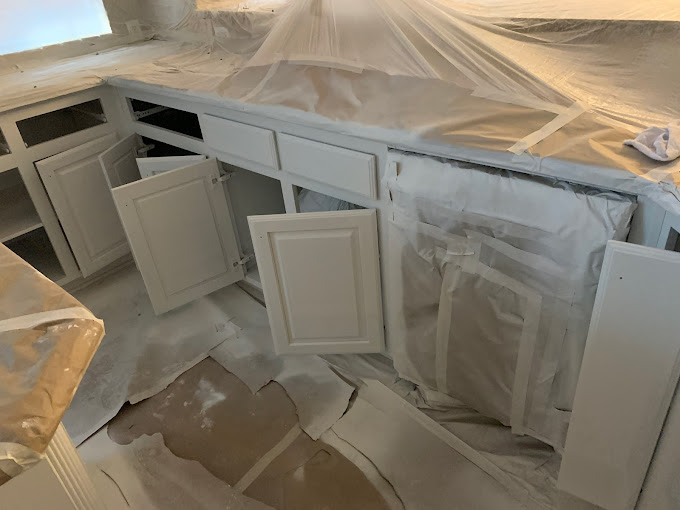
If your cabinets are solid wood (or a wood veneer) and the goal is to keep or enhance the natural grain, staining is often a better fit than painting. Staining can also help when your current finish is uneven in a way that paint would highlight as “texture and contrast.” Start by checking material type, current finish condition, and how repairs were done. If you are unsure, a professional cabinet refinishing evaluation is the safest next step, because the surface prep and product selection determine whether the end result looks smooth and consistent.
What to Check First
Before deciding between cabinet painting and kitchen cabinet staining, look at the cabinets themselves and the “why” behind the finish problems. A few homeowner observations can point you in the right direction quickly.
Check the cabinet material
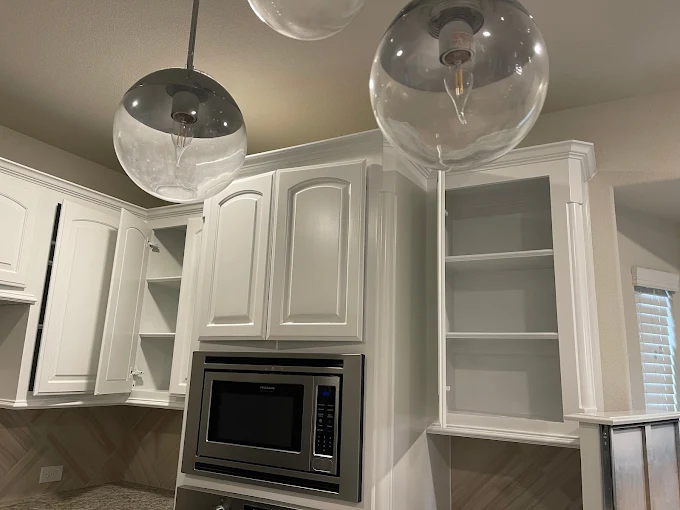
Staining typically performs best on wood surfaces where you want to preserve grain character. If you have wood veneer or solid wood, staining may deliver a more natural, uniform appearance than a thick painted layer.
Check how repairs look
If you see patching, mismatched areas, or different sheen from previous repairs, staining can sometimes blend tone more realistically when the surface is prepped correctly. Painting can also work, but it may make inconsistencies more obvious.
Check the existing finish condition
When the finish is peeling, heavily worn, or contaminated, both staining and painting require surface preparation. The difference is that staining is more sensitive to uneven absorption, so you want to confirm the surface is ready for an even tone.
Main Things Customers Should Understand
Staining is not just “a different color.” It changes how the cabinet surface accepts tone, and it affects how the final finish reads in your kitchen lighting. Here are the most common scenarios where staining tends to be the better choice for cabinet refinishing or cabinet refacing decisions.
Professional observation: When cabinet doors show uneven wear that looks “different by material layer,” staining often reveals the wood more naturally. Painting can hide some issues, but it can also amplify unevenness if the prep leaves subtle texture or absorption differences.
Staining can be the smarter option when:
- You want to keep the grain character. If the wood texture is part of the style you like, staining usually matches that goal better than paint.
- Your cabinets are solid wood or wood veneer. These surfaces are designed to take stain and finish in a way that looks cohesive across doors.
- Repairs or sanding marks are present. With the right preparation, staining can help create a more blended look. The key is proper surface prep for consistent absorption.
- You are aiming for subtle color change. If you want warmth, depth, or a tone shift rather than a fully opaque makeover, kitchen cabinet staining often delivers that result more naturally.
- Your cabinets have minor surface wear rather than heavy damage. If the structure is fine and the finish is the main issue, refinishing by staining can restore the look without covering everything with paint.
| Situation | Often best aligned with staining | Often better aligned with painting |
|---|---|---|
| Cabinet material | Solid wood or wood veneer where grain matters | Cabinets where you want a uniform, opaque finish over texture |
| Desired look | Warm, natural tone and depth (cabinet color change with subtlety) | High-contrast or fully opaque color change |
| Current finish issues | Finish wear that can be prepped for even absorption | Finishes that are better suited to being fully covered after prep |
| How repairs show | Repairs that can be brought to a consistent surface for tone blending | Repairs that are better concealed with an opaque coating |
Why This Matters in Allen, TX
In Allen, TX, kitchens often run through daily temperature and humidity swings, especially near windows and cooking areas. Over time, that movement can make cabinet finishes look uneven, dull, or slightly different door-to-door. Staining decisions should account for how your cabinets were built and how the surface has aged. If you are seeing tonal variation that looks “built into the wood,” staining can often look more consistent because it works with the surface rather than covering it completely.
Local homeowner tip: Before you refinish, confirm you are also addressing surface preparation and any nearby moisture sources. If cabinets are exposed to frequent steam or grease, the finish longevity depends on prep quality and proper sealing.
Need help deciding between kitchen cabinet staining and cabinet painting?
If your cabinets are in Allen, TX and surrounding areas, MJ Workforce Solutions can help you choose the right approach for a more even, long-lasting finish.
Explore kitchen cabinet stainingCommon Mistakes to Avoid
Cabinet refinishing can go sideways when the decision is based on color alone. These are the most common mistakes homeowners make when they are considering cabinet painting versus staining.
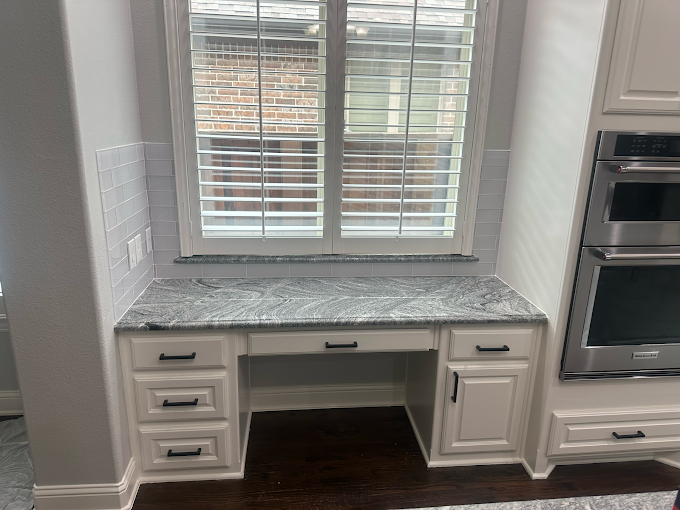
- Choosing staining or painting without confirming cabinet material and finish type. The wrong method can lead to uneven tone or a finish that does not look consistent.
- Skipping thorough surface preparation. Both staining and painting depend on prep. If the surface is contaminated or not evenly prepared, the finish will reflect that.
- Assuming “paint will hide everything.” Paint can highlight texture differences, especially if the surface was not prepped evenly.
- Trying to rush the process between coats. Rushing cure times can affect how the finish levels and how durable it feels during daily use.
- Overlooking adjacent surfaces. If your kitchen walls or trim are dated, the cabinet finish may look off even when the cabinets are refinished correctly.
Customer Checklist
Use this quick checklist to keep your decision grounded. It is designed to help you evaluate staining readiness and understand what you should ask about during cabinet refinishing planning.
Cabinet staining readiness checklist:
- Identify whether your cabinet doors are solid wood, wood veneer, or another material.
- Check for peeling, flaking, or heavy wear that suggests the existing finish needs more than light cleaning.
- Look for door-to-door tone differences that suggest uneven absorption or past repairs.
- Confirm whether the style you want is grain-forward (staining) or fully opaque (painting).
- Plan for consistent prep across all doors and drawer fronts so the final sheen and tone match.
- Consider your broader interior painting goals, including trim painting and wall condition, so the cabinets do not stand out for the wrong reasons.
A Representative Scenario (Allen, TX)
A homeowner in Allen, TX had kitchen cabinet refacing done years ago, but the current doors showed uneven color after cleaning and minor repairs. They initially thought cabinet painting was the quickest route to a uniform look. After a closer inspection, the team focused on how the existing surface would accept new coatings and whether the wood character could be brought back evenly. The homeowner chose kitchen cabinet staining to keep the grain look consistent, while the surrounding prep work ensured the finish read the same across doors and drawers.
Frequently Asked Questions
Here are common questions homeowners in Allen, TX have when deciding between cabinet painting and kitchen cabinet staining.
How can I tell if my cabinets are better for staining than painting?
Look at the cabinet material and your end goal. If your doors are solid wood or wood veneer and you want to keep the grain character, staining is usually the better match. If your priority is a fully opaque, uniform color hiding most surface character, painting may fit better. Also check whether repairs or sanding marks create noticeable tonal differences. Staining can blend tone more naturally when the surface is prepped for consistent absorption.
Will staining hide scratches and worn areas?
Staining is not the same as filling. It can improve the overall look by restoring color depth, but scratches and deep damage still need proper surface preparation to avoid showing through. If the surface is uneven or contaminated, staining can accentuate those differences. For best results, the prep process matters as much as the choice between staining and painting.
What should I do if some doors look darker than others?
Door-to-door color differences often come from uneven absorption, past repairs, or inconsistent wear patterns. That is a sign to slow down and evaluate the surface rather than choosing based on color alone. A professional approach focuses on getting the surface ready for even tone so the final cabinet color change looks consistent across the whole kitchen.
Can MJ Workforce Solutions help with the prep work too?
Yes. Cabinet refinishing results depend heavily on surface preparation and proper priming services and caulking and sealing where needed. If you also have wall or trim issues around the cabinets, getting drywall repair, drywall patching, or trim painting addressed can help the cabinets look right in the full room.
Should I consider staining for all cabinet styles?
Not always. Staining tends to work best when the cabinet material and finish condition support even tone and when you want a grain-forward look. Some cabinets may be better suited to cabinet painting because of how the surface was built or how the existing finish behaves. The best choice is the one that matches your material, the current condition, and the look you want after refinishing.
Ready to get a cabinet refinishing plan that fits your cabinets?
MJ Workforce Solutions serves Allen, TX and surrounding areas. If you want help deciding between cabinet painting and kitchen cabinet staining, reach out and we will guide you toward the approach that matches your goals.
(945) 253-0961MJ Workforce Solutions
MJ Workforce Solutions is a painting-focused team serving homeowners and property owners in Allen, TX and surrounding areas. If you are planning interior painting, cabinet painting, kitchen cabinet staining, trim painting, or related prep work, our goal is to help you choose a finish approach that looks consistent and holds up to everyday kitchen use.

If your kitchen refresh includes more than cabinets, consider pairing your project with cabinet painting services in Allen, updating the walls with drywall services, or refreshing adjacent surfaces for a cohesive finish with wallpaper installation.