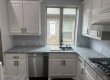

Stubborn Cabinet Finish Problems After Years of Wear
If your kitchen or bathroom cabinets look uneven after cleaning, have peeling edges, or show a “worn through” sheen where hands touch most, you are not alone. This guide helps you understand why old finishes fail and what to do about it with the right preparation and refinishing approach in Allen, TX.
You wipe down your cabinet doors, try to match the look with a quick touch-up, and still the finish looks patchy. Maybe the paint won’t bond evenly, or the surface feels rough and chalky in spots. In other cases, you notice the problem is worst near handles and hinges, where daily use wears the top coat first.
These issues usually come from the cabinet’s existing coating, contamination that is hard to remove, or sanding and priming that did not fully address what was underneath. Below, you will learn how to diagnose the most common cabinet finish problems, what “good prep” actually looks like, and when cabinet painting, kitchen cabinet staining, or cabinet refacing makes the most sense.
- Quick answer
- What to check first
- Main things customers should understand
- Why this matters in Allen, TX
- Common mistakes to avoid
- Customer checklist
- Frequently asked questions
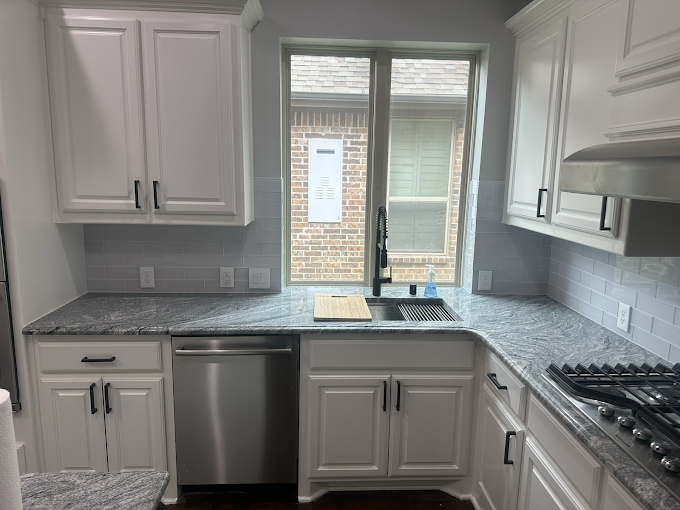
Quick Answer
If cabinet paint or stain looks uneven after years of wear, the fix usually starts with surface preparation, not just a new top coat. Look for peeling, dull or chalky areas, greasy buildup, or spots where previous coatings do not sand smoothly. The practical recommendation is to have the surface cleaned, properly deglossed, and assessed for the correct primer and finishing system before you choose cabinet painting, kitchen cabinet staining, or cabinet color change. MJ Workforce Solutions can help you match the approach to what is already on your cabinets in Allen, TX.
What to Check First
Before you decide on cabinet painting or kitchen cabinet staining, do a quick inspection that tells you whether you are dealing with a coating problem, a contamination problem, or a substrate issue. These checks are fast, and they prevent you from investing in the wrong refinishing method.
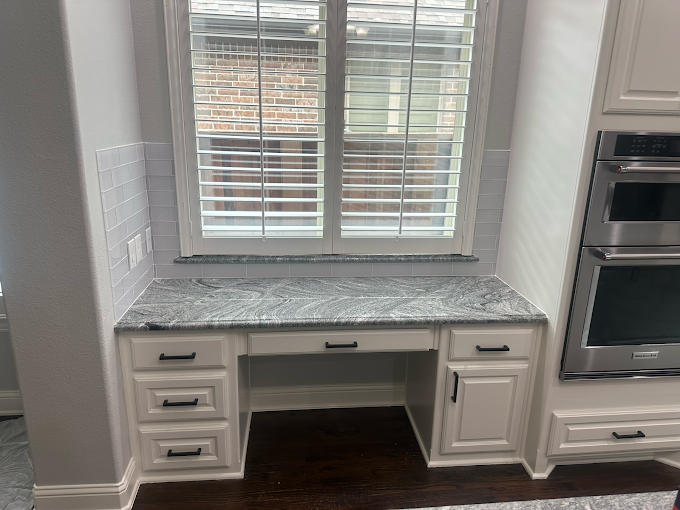
1) Test adhesion in small areas
Gently rub a hidden spot with a damp cloth and then with your fingernail. If residue transfers easily or edges lift, you need stronger prep and the right primer system.
2) Look for contamination
Kitchen cabinets often collect cooking oils and airborne grime. Even after cleaning, slick or sticky patches can cause paint to fisheye or peel.
3) Check the wear pattern
High-touch zones near handles and drawer pulls can show shiny wear, micro-scratches, or worn spots that change how stain and paint bond.
Professional observation: When cabinets have been refinished before, the “problem” is often layers. If the prior coating is not fully addressed, a new cabinet finish can look fine at first and then fail at seams, corners, and edges.
Main Things Customers Should Understand
Cabinet refinishing is less about the color and more about the system that gets you there. In Allen, TX homes, the most stubborn finish failures tend to show up where moisture, cleaning chemicals, and daily contact have already stressed the existing coating.
Key concept: The finish you see is only the last step. The durability comes from cleaning, surface preparation, priming services, and matching the top coat to the existing condition.
| What you notice | What it usually means | Typical refinishing direction |
|---|---|---|
| Peeling or lifting at edges | Existing coating bond is failing or was contaminated before | Cabinet refinishing with proper deglossing, priming, and top coat |
| Patchy sheen after cleaning | Grease or residue is affecting how the surface wets out | Surface preparation first, then cabinet painting with a compatible primer |
| Rough, chalky, or “dry” spots | Wear has changed the surface texture and absorption | Priming services and controlled sanding for an even finish |
| Stain looks blotchy | Uneven porosity or old finish interference | Kitchen cabinet staining after conditioning and prep |
| Doors and frames are damaged beyond a surface fix | Substrate or structural wear is showing | Cabinet refacing direction or a plan that addresses affected components |
Firsthand-style observation: why “one coat” never behaves the same
In real homes, we often see that the same cabinet door can look different from one end to the other. That is not just cosmetic. It usually reflects different wear levels, prior patching, and how the old finish was sanded. If the prep is rushed, the top coat can dry faster in some areas, creating a visible “map” of where the surface was ready versus where it was not.
Choosing between cabinet painting, kitchen cabinet staining, and cabinet refinishing
Cabinet painting is a strong fit when you want a cabinet color change, cover worn surfaces, or create a more uniform look. Kitchen cabinet staining can be the better path when you want to highlight wood character, but it requires the surface to be conditioned so the stain absorbs evenly. Cabinet refinishing typically combines the right preparation steps to reset the surface so the final coat looks consistent.
Where drywall and trim work can affect the final result
Cabinet work often happens alongside other updates. If nearby drywall is rough, you can end up with uneven light reflection across the room. If you also need drywall repair, drywall services, or drywall finishing, addressing those surfaces before final painting can help the overall kitchen or bath look cohesive. For details, you can review MJ Workforce Solutions drywall services.
Why This Matters in Allen, TX
In Allen, TX, many homes see seasonal swings that affect indoor humidity and how surfaces feel to the touch. Cabinets can also take on more cleaning cycles because kitchens get used year-round, with grease and moisture building up around sinks and cooking areas. That combination makes surface preparation more than “nice to have.” If the surface is not properly cleaned, deglossed, and primed, the first coat may look okay, but the wear pattern will show through faster.
Common Mistakes to Avoid
Most stubborn cabinet finish problems are not caused by the homeowner choosing the wrong color. They are caused by skipping steps that control how the new finish bonds and levels out over time. Here are the most common missteps we see around cabinet painting and kitchen cabinet staining.
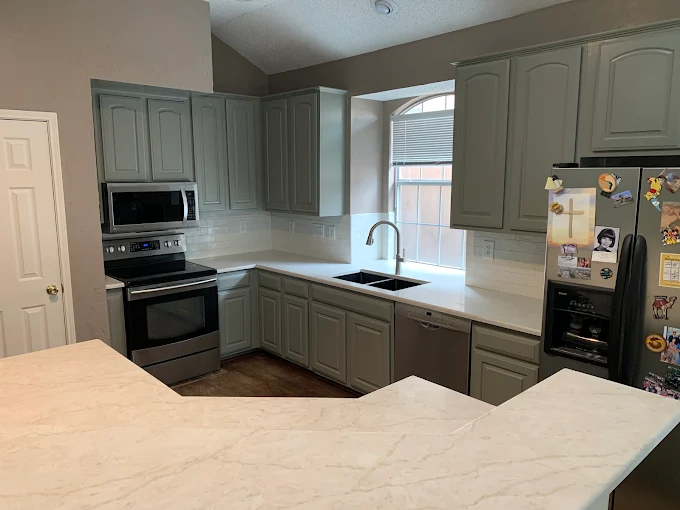
- Painting over residue. Kitchen oils and cleaners can remain invisible, but they interfere with adhesion and create fisheyes or peeling.
- Relying on sanding alone. Sanding changes texture, but it does not replace proper priming services when the surface needs a reset.
- Choosing a finish without matching the existing coating. Different prior coatings respond differently. A mismatch can cause flash drying, uneven sheen, or lifting at edges.
- Ignoring corners and edges. The places you touch most and where doors meet the frame are where failures start.
- Skipping a compatibility check for stain. For kitchen cabinet staining, blotchiness often comes from uneven absorption or old finish interference.
Get a plan for your cabinet finish problems
If your cabinets in Allen, TX look uneven, tacky, peeling, or blotchy, the fastest path is a prep-first assessment. MJ Workforce Solutions can help you decide whether cabinet painting, kitchen cabinet staining, cabinet refinishing, or cabinet refacing is the right direction for what is already on your doors and frames.
Explore cabinet painting in AllenCustomer Checklist
Use this checklist when you are planning cabinet painting, cabinet refinishing, or cabinet color change. It helps you communicate clearly and also helps you spot whether the process is thorough enough to avoid repeat problems.
- Identify the problem areas. Note peeling spots, rough patches, blotchy stain areas, and high-touch zones near handles.
- Confirm surface cleaning and deglossing. Ask what will be used to remove grease and how the finish will be scuffed for bonding.
- Plan for priming services. Make sure the primer is selected for the existing cabinet surface condition.
- Decide on the finish direction. Clarify whether you want cabinet painting, kitchen cabinet staining, or cabinet refinishing for a uniform look.
- Discuss sheen and consistency. Uneven sheen often signals uneven prep. Aim for a consistent top coat application.
- Address adjacent surfaces if needed. If your kitchen or bath also needs drywall repair or trim painting, coordinate timing so the final look matches.
Representative scenario (anonymized)
A homeowner in Allen, TX noticed their kitchen cabinet doors had a worn, glossy patch near the pulls and dull, chalky areas around corners. After cleaning, the doors still looked uneven. Rather than repainting immediately, the next step was a prep-focused assessment: residue control, controlled sanding, and priming services to reset bond quality. The final finish looked uniform because the preparation matched the condition of the existing coating, not just the desired cabinet color change.
Frequently Asked Questions
Here are practical answers to common questions homeowners have when cabinet finish problems show up after years of wear.
Why does cabinet paint look uneven even after I clean the doors?
Uneven cabinet paint usually comes from surface readiness, not just cleanliness. Kitchen cabinets can hold onto oils, cleaning residue, and invisible contamination that affects how the new coating bonds and levels. If the surface is not properly deglossed and primed for the existing finish condition, the top coat can dry at different rates across the door, creating patchy sheen. A prep-first approach typically fixes the root cause before the color goes on.
Can kitchen cabinet staining fix blotchy areas?
Kitchen cabinet staining can improve the look, but it depends on why the stain is blotchy. Blotching often happens when the wood or existing coating has uneven absorption, or when prior finishes interfere with stain penetration. The solution is usually a prep and conditioning step that creates more uniform absorption, followed by careful application. If the old finish is too inconsistent or failing, cabinet painting or cabinet refinishing may be a better match than re-staining.
Is cabinet refinishing better than cabinet painting?
Cabinet painting focuses on applying a new color system, while cabinet refinishing is a broader reset of the surface condition so the final result holds up. In many real kitchens, the “stubborn” problems are bond-related, and refinishing helps address that before the final coat. If your cabinets have peeling edges, rough chalky wear, or uneven sheen from prior wear, a refinishing plan with priming services can be the more durable path.
When does cabinet refacing make more sense?
Cabinet refacing tends to be a better direction when the cabinet components are damaged beyond a surface-level fix, or when doors and frames need more than refinishing to look right. If the substrate is warped, severely worn, or structurally compromised, repainting or re-staining might not deliver consistent results. A thorough assessment helps confirm whether the cabinet finish issues are surface-only or whether the underlying components need a different approach.
Do I need to prep nearby walls before cabinet painting?
Often, yes. Cabinets do not exist in isolation. If your kitchen has drywall repair spots, uneven texture, or scuffed trim, light can highlight differences and make cabinet finishes look less consistent. Coordinating drywall services and trim painting helps the room read as one finished system. If you are also dealing with interior wall updates, it can be helpful to review MJ Workforce Solutions cabinet painting service areas in Allen and plan the sequence so everything matches visually.
Ready to restore a consistent cabinet finish in Allen?
If your cabinets have stubborn finish problems after years of wear, MJ Workforce Solutions can help you choose the right path for cabinet painting, kitchen cabinet staining, cabinet refinishing, cabinet refacing, and cabinet color change. Start with a conversation about what you are seeing in your kitchen or bath and we will map a prep-first approach that makes sense for your home.
(945) 253-0961
MJ Workforce Solutions
MJ Workforce Solutions provides painting-focused services for homeowners and property owners across Allen, TX & surrounding areas. Our work is centered on surface prep, careful finishing, and practical refinishing options when cabinets, walls, and trim need a more durable, consistent look. If your cabinet finish problems are showing up in the same places every day, we can help you address the root cause instead of just the symptoms.
For related interior updates, you can also explore kitchen cabinet staining or cabinet painting in Allen.