Why Kitchen Cabinet Staining Peels or Discolors
If your cabinet stain looks blotchy, turns dull, or starts to lift, it usually comes down to preparation and compatibility. This guide explains the most common causes, what to inspect first, and what a proper cabinet refinishing plan should include for homes in Allen, TX.
After staining your kitchen cabinets, you might notice that the finish doesn’t look even. A few weeks later, the stain can start to peel at edges or around hardware, or it may discolor near the areas you touch most.
In Allen, TX, kitchens also see everyday heat and humidity swings that can stress an unprepared surface. This guide helps you understand why staining fails, what to check before you rework anything, and how to choose a cabinet refinishing approach that holds up.
- Quick answer
- What to check first
- Main things customers should understand
- Why this matters in Allen, TX
- Common mistakes to avoid
- Customer checklist
- Frequently asked questions
Quick Answer
Kitchen cabinet staining peels or discolors most often because the surface was not cleaned and deglossed properly, old finish was not removed or bonded to correctly, or the stain and topcoat system was not compatible. Start by checking whether the stain lifts when lightly rubbed, whether the finish looks blotchy (often contamination or uneven absorption), and whether the problem is concentrated on edges and hardware areas. For best results, use a surface-prep and priming process designed for cabinet refinishing, then apply a matching stain-to-topcoat system. If peeling has started, plan on proper prep before restaining.
What to Check First
Before you buy more stain or start sanding aggressively, take a few minutes to identify what kind of failure you have. Peeling suggests the stain or topcoat did not bond. Blotching and uneven color suggest absorption problems. A dull or yellowed look can point to the wrong product system for the existing finish or to residue trapped under the coating.
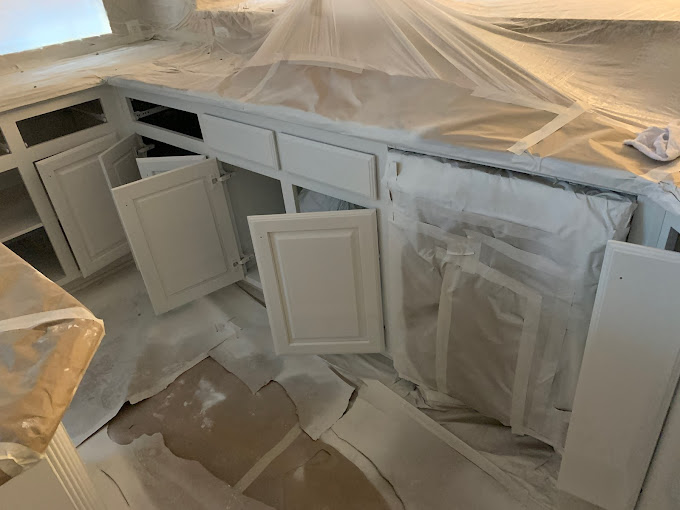
Professional observation: In many Allen, TX kitchens, the earliest signs show up around door edges, drawer fronts, and areas near cooking. Those spots often have more grease exposure and more wear, so they reveal preparation issues faster than the flat, untouched sections.
Main Things Customers Should Understand
Cabinet staining is not just “adding color.” A stable stained finish depends on the right surface condition, the right stain, and the right protective topcoat. When any link in the chain is weak, the finish can peel, lift, or change tone over time.
| What you notice | Likely cause | What to address in the next step |
|---|---|---|
| Stain looks blotchy or uneven | Uneven surface absorption from residue, waxes, or inconsistent deglossing | Clean thoroughly, remove contaminants, and prep so the stain wets out evenly |
| Stain dulls or changes color | Incompatible stain/topcoat system or an old finish that wasn’t properly handled | Use a compatible system and confirm the existing finish type before reworking |
| Peeling at edges or around hardware | Poor adhesion due to insufficient bonding prep or contamination in high-touch areas | Remove failing material to sound surface and rebuild the finish system correctly |
| Lifting or bubbling under the stain | Moisture or residue trapped beneath coating layers | Identify moisture and contamination sources, then prep and recoat once stable |
| Color fades faster in sun-facing areas | Topcoat protection not matched to the stain and environment | Choose the right protective layer to help the finish stay uniform |
Related cabinet and surface prep options
If your cabinets are already in trouble, the right approach may be cabinet refacing or cabinet color change, paired with the right prep. For more context, you can review MJ Workforce Solutions’ work on kitchen cabinet staining and cabinet painting service areas in Allen.
Practical recommendation: Treat your existing cabinet finish as part of the “substrate.” If the coating is glossy, contaminated, or partially failing, you usually need a prep and bonding plan first, not a second coat of stain.
Why This Matters in Allen, TX
In Allen, TX, kitchens frequently experience shifts in heat from cooking and humidity from daily routines. That combination can make coatings more sensitive, especially on cabinet areas that see grease film, fingerprints, and repeated wipe-downs. When the surface is not properly degreased and prepared, the stain can look fine at first and still fail as the finish expands, contracts, or releases trapped contaminants.
MJ Workforce Solutions typically recommends a cabinet refinishing sequence that includes careful surface preparation before any stain or topcoat. If your cabinet finish is already peeling, the priority is stabilizing the surface so the next stain system can bond and stay consistent.
Need help diagnosing peeling or discoloration?
Get a practical plan for your cabinets in Allen, TX. We can help you understand whether you’re looking at a surface prep issue, a compatibility issue, or a coating failure that needs removal.
(945) 253-0961Common Mistakes to Avoid
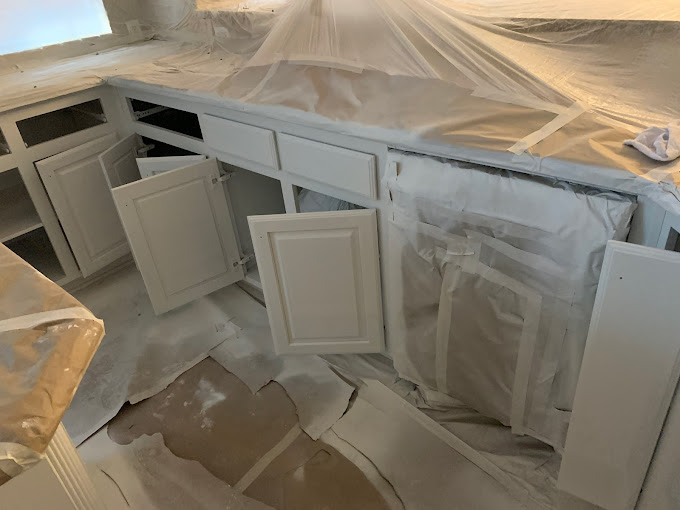
Most cabinet staining problems are preventable. Homeowners often recoat too soon, skip the bonding step, or sand in a way that doesn’t actually solve the adhesion problem. Here are the issues we see most often when cabinets peel or discolor.
- Staining over grease or residue from cooking and cleaning products, which can prevent proper adhesion.
- Assuming sanding alone fixes glossy finishes without fully deglossing or cleaning between steps.
- Mixing stain and topcoat products without confirming compatibility for cabinet refinishing.
- Re-staining without removing failing areas when peeling has already started.
- Rushing cure times before the next layer, which can trap issues underneath.
- Ignoring edge and hardware zones where oils and daily wear are concentrated.
Customer Checklist
Use this checklist to prepare for a smoother cabinet refinishing outcome. It’s written for homeowners who want to avoid rework and make sure the plan matches the cabinet’s current condition.
- Inspect doors, drawers, and the inside edges for early lifting or color changes.
- Check whether the surface is glossy, rough, or already failing in spots (lightly test an inconspicuous area).
- Confirm what’s on the cabinets now, such as existing paint, stain, or a clear finish, before choosing a stain system.
- Plan for thorough cleaning and surface prep that targets grease and contaminants.
- Ask about how the finish will be protected with a compatible topcoat after staining.
- Consider whether a cabinet color change or cabinet refacing approach better fits the current condition.
Representative scenario (what this looks like in real life)
A homeowner in Allen, TX stained their kitchen cabinet doors to darken the look. The first week looked promising, but within a month, the stain lightened in some flat areas and began to peel at the edges. When the doors were inspected, the failing zones were concentrated where grease film accumulates and where the existing finish was still slightly slick. The fix was not “more stain.” The failing material and contamination had to be addressed first so a compatible stain-and-topcoat system could bond correctly.
Frequently Asked Questions
Why does my kitchen cabinet stain look blotchy after it dries?
Blotchy cabinet staining usually comes from uneven absorption. Common causes include residue left behind from cooking oils, cleaning products, or a surface that was not fully deglossed. If the existing finish is glossy in some areas and dull in others, stain can penetrate unevenly and produce dark or light patches. The practical step is to identify whether the surface has contamination or an inconsistent sheen, then prep so the stain wets out evenly before applying stain again.
Can I restain cabinets if the finish has started peeling?
If peeling has started, restaining over the failing areas typically leads to the same problem repeating. Peeling is a sign the coating layers are not bonding to the surface. The practical approach is to remove or stabilize the failing material down to a sound surface, then rebuild using a surface-prep process and a compatible stain and topcoat system. That way, the next layer can adhere and stay uniform.
What’s the difference between kitchen cabinet staining and cabinet refinishing?
Kitchen cabinet staining is a color process that adds tone while letting some wood characteristics show, but it still requires proper cleaning, prep, and a protective topcoat. Cabinet refinishing is the broader umbrella that can include repairing surface issues, preparing the substrate, applying paint or stain, and protecting with a durable clear or topcoat system. If your cabinets are discoloring or peeling, refinishing often means correcting the underlying surface and adhesion issues, not just changing the color.
How do humidity and heat affect stained cabinets in Allen, TX?
Kitchens experience heat from cooking and humidity from everyday routines. Over time, those conditions can stress coatings that were applied over an unprepared or contaminated surface. When grease, moisture, or residue remains trapped under the finish, the system can lose adhesion and cause peeling or uneven tone. In Allen, TX, the practical takeaway is to focus on prep and compatibility so the finish can handle normal kitchen conditions.
Should I choose cabinet painting or cabinet refacing instead?
It depends on what’s happening to the current surfaces. If you want to keep a wood-like look and your cabinets can be properly prepped, staining may work well with the right system. If the existing finish is widely failing or you want a more uniform color change, cabinet painting or cabinet refacing might be a better fit. The practical recommendation is to evaluate adhesion issues first, then choose the process that matches the cabinet’s condition and your desired finish.
Get a clear next step for your cabinet finish
If your kitchen cabinets are peeling or discoloring, the best fix starts with diagnosing what’s on the surface and why the stain system isn’t holding. MJ Workforce Solutions serves Allen, TX and nearby areas with practical cabinet refinishing guidance.
Explore kitchen cabinet staining
MJ Workforce Solutions
MJ Workforce Solutions provides painting services for homeowners and property managers in Allen, TX and surrounding areas. Whether you’re dealing with cabinet color change, interior painting, or surface prep needs, our focus is on practical results that look good and hold up in real kitchen conditions.
Call (945) 253-0961 for help planning your next step.
For additional prep and finish context, you may also find these helpful: drywall services, wallpaper installation, and floor painting and coating in Allen.