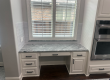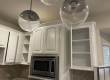

If your kitchen feels dated, worn, or just “too light,” staining your cabinets can bring back depth and warmth. This guide walks you through what to check before staining, how to avoid common failures, and how to plan for a finish that looks great in an Allen, TX home.
You wipe the fronts after dinner and still feel like the cabinets look uneven. Some areas look darker, others look dull, and the “warm” color you wanted doesn’t show up the way it did in the sample photo.
That problem is common when kitchens in Allen, TX have cabinets that were previously painted, sealed, or refinished. Stain reacts differently depending on what is already on the wood surface, and the wrong prep can lead to blotches, peeling, or a finish that never fully levels out.
This guide helps you understand what determines stain color on kitchen cabinets, what prep matters most, and how to choose between cabinet painting, cabinet refinishing, and cabinet refacing based on your current condition.
Quick Answer
Kitchen cabinet staining looks best when the surface is correctly prepped and matched to the stain system. Start by checking whether your cabinets are bare wood, previously painted, or sealed with a finish that blocks penetration. If there is paint or heavy sealing, staining without proper paint removal and surface prep often causes blotching or uneven tone. For a warm, rich result, plan for cleaning, sanding, and priming or stripping as needed, then apply stain with consistent technique. If you’re unsure what’s on your cabinets, MJ Workforce Solutions can help you evaluate your surfaces before you commit to a color change.
What to Check First
Before picking a warm brown or honey-wood tone, take a few minutes to evaluate what your cabinets are currently “made of” from a finish standpoint. Stain performance depends more on the existing coating than on the color you choose.
1) What’s on the surface?
Look for glossy varnish, matte paint, or areas that feel slick. If the finish doesn’t absorb water, stain may not penetrate evenly. This is where paint removal or stripping often becomes part of cabinet refinishing.
2) Where do you see uneven wear?
Check corners, handles, and edges. Kitchen grease and frequent wiping can create residue that prevents stain from bonding consistently.
3) Are repairs ready to disappear?
Chips, dents, or rough patches should be addressed before staining. Otherwise, the stain can make repairs more visible instead of blending them.
If you’re also planning wall or room updates around the kitchen, you may want to coordinate timing. For example, drywall repair and finishing can reduce visible transitions around cabinet installs and trim work. Explore drywall services when your cabinets are part of a broader remodel.
Main Things Customers Should Understand
Warm, rich cabinet color is not just “stain plus topcoat.” It’s a process that needs the right sequence. Here are the factors that most often decide whether the final look is even, smooth, and durable for daily kitchen use.
Professional observation: In many Allen, TX kitchens, cabinets have been painted or refinished before. When stain meets an old coating, it can sit on top instead of soaking in, which is why proper surface preparation is usually the difference between a uniform tone and a blotchy look.
Surface preparation drives the tone
Stain color is influenced by how much the product penetrates. Smooth, sealed, or previously coated surfaces often produce lighter or blotchier results. Rough or contaminated surfaces can darken in spots. That’s why cleaning, sanding, and (when needed) paint stripping or paint removal are key steps in cabinet refinishing.
If your cabinets have been repainted and you’re considering a full color change, it can help to understand options for removing old coatings. See paint removal in Allen to get a sense of how prep fits into the overall cabinet project.
Color samples are only useful when they match your surface
A stain sample applied to bare wood can look different from stain applied over a sanded, prepped, or previously finished cabinet. A representative test area should be done on the same cabinet material and under the same prep steps you plan for the full job.
Topcoat choice affects richness and daily cleanability
That warm “depth” you see in stained cabinets is often the combination of stain and the final clear finish. The topcoat influences how the surface reflects light, how easily grease wipes off, and whether the sheen feels too shiny or too flat in your kitchen lighting.
Hardware and workflow matter for an even finish
Doors and drawer fronts typically need consistent application. If pieces are not handled the same way, you can see variation in tone and sheen. Even in a typical residential kitchen, the goal is to maintain consistent coverage and allow each step to cure properly.
Why this matters in Allen, TX
Allen, TX homes often have kitchens that see heavy day-to-day use, including frequent cleaning and cooking splatter. Over time, that can leave a film that interferes with stain bonding. Also, lighting in open-plan kitchens can make “warm” tones look different from room to room, especially where cabinets are near windows or bright overhead fixtures.
MJ Workforce Solutions plans cabinet staining around those realities: careful prep so the stain can lay down evenly, and a finish approach designed to hold up to the way kitchens are actually lived in. If you’re thinking about other updates too, coordinating trim and door painting can help the whole kitchen read cohesive. For related interior work, review our kitchen cabinet staining service.
Practical recommendation: If your cabinets are currently painted or glossy, treat staining as a cabinet refinishing project that starts with prep. The faster you try to skip that step, the more likely you will end up repainting or redoing sections later.
| What you have now | What you want | Best-fit approach to discuss |
|---|---|---|
| Previously painted or sealed cabinets | Warm, rich wood-like tone | Cabinet refinishing steps that include proper paint removal and surface prep before staining |
| Wood cabinets with uneven wear | Even tone and revived depth | Cabinet staining with focused cleaning, sanding, and careful topcoat selection |
| Cabinets with visible damage or rough patches | Cleaner, more uniform appearance | Repair and finishing work first, then stain so patches blend instead of showing |
| Cabinets that need a dramatic color shift fast | Consistent color across all doors | Cabinet refacing or cabinet painting may be worth comparing depending on surface condition |
Get clarity on whether staining is the right path
Tell us what your cabinets are currently coated with and what warm color you’re aiming for. MJ Workforce Solutions can help you plan a finish that looks even in your Allen, TX kitchen.
Contact MJ Workforce SolutionsCommon Mistakes to Avoid
Most staining disappointments come from skipping a step or choosing the wrong sequence. Here are the issues homeowners in Allen, TX run into most often.
- Staining over grease or residue: Kitchen buildup can prevent even bonding and create blotches that show up after the finish dries.
- Assuming all “wood” cabinets absorb stain the same way: Different woods, prior finishes, and sanding levels affect penetration and final tone.
- Not doing a test area on your actual surface: A sample is only helpful when matched to your current prep and cabinet material.
- Ignoring repair visibility: Chips and dents that are not addressed before staining can become darker or more noticeable after the stain settles.
- Rushing the topcoat: Applying the next step too soon can affect how the finish levels and how the cabinet looks under real kitchen lighting.
Customer Checklist
- Confirm what finish is currently on the cabinet doors and drawer fronts (paint, varnish, or bare wood feel).
- Clean the cabinet surfaces thoroughly before any sanding or staining plan is finalized.
- Plan for sanding and evaluation to see how evenly the surface accepts stain (or whether stripping is needed).
- Schedule a small test area that matches the actual prep you’ll use on the full project.
- Identify and repair chips, dents, or rough spots before staining so repairs blend instead of contrast.
- Choose a topcoat approach that fits your kitchen lifestyle for easy wipe-down and consistent sheen.
- Coordinate timing with other interior updates (like drywall repair) so the final kitchen look reads cohesive.
Representative scenario: fixing a “blotchy warm brown” attempt
A homeowner in Allen, TX wanted a warm, rich cabinet color similar to a magazine photo. Their cabinets had been painted earlier, but they tried to stain anyway. After the first coat, the color looked good on flat sections and noticeably blotchy around edges and raised panels. The uneven tone wasn’t just the stain choice. The older coating and inconsistent prep prevented even penetration.
In the corrected approach, the team focused on thorough cleaning, sanding consistency, and the right level of paint removal for the areas that needed it. Once the surface accepted stain more uniformly, the warm tone matched much better across doors and drawers, and the final topcoat helped the finish look rich under morning and evening lighting.
Frequently Asked Questions
Can you stain kitchen cabinets that were previously painted?
Yes, staining can be possible, but it depends on what the cabinets were coated with and how well the surface can be prepped. If the existing paint or sealant blocks penetration, stain may not bond evenly and you can end up with blotches or a tone that looks inconsistent. A prep-first approach typically includes cleaning, sanding, and evaluating whether paint removal or stripping is needed before stain goes on. MJ Workforce Solutions can help you assess your current cabinet surface so you can plan the right cabinet refinishing steps.
Will stained cabinets look “warm” in a bright kitchen?
Warm tones can look great in bright kitchens, but lighting changes how brown and amber shades read. That’s why a test area on your actual cabinet finish is so valuable. The final look is influenced by the stain color, how evenly the stain penetrates, and the clear topcoat’s sheen level. If your cabinets sit near windows, morning light can make some shades look lighter, while evening lighting may deepen the tone. Proper topcoat selection helps the finish look rich across different lighting conditions.
What’s the biggest cause of blotchy staining?
Blotching usually comes from uneven surface conditions. Common causes include residue from cooking, inconsistent sanding, or a surface that has previously been sealed or painted in a way that prevents uniform stain penetration. Even small differences in prep can show up after the stain dries. The best way to reduce risk is to clean thoroughly, sand consistently, and test on a representative section before committing to the full set of doors and drawers.
How do I decide between cabinet staining and cabinet painting?
Choose cabinet staining when you want to emphasize wood character and achieve a warm, natural look that reads rich in your kitchen. Cabinet painting can be a better option when you want a consistent color across all surfaces, especially if the existing finish is difficult to prep for stain or if you want to minimize differences caused by the wood grain. The right decision depends on what’s currently on the cabinets and how much surface work your project needs. You can also review related options like cabinet painting in Allen to compare approaches.
Do I need to remove hardware before staining?
Removing or carefully handling hardware is often part of getting an even result. Doors and drawer fronts typically get stained in a way that allows consistent coverage, including around edges and panel sections. When hardware is in place, it can interfere with application and leave small areas with different absorption. If you have decorative hardware or want to keep the same pieces, it’s still usually best to plan for careful disassembly so the stained finish looks uniform across every door and drawer front.
Ready for warm, rich kitchen cabinets?
MJ Workforce Solutions helps homeowners in Allen, TX plan cabinet refinishing steps that support even staining results. If you’re aiming for a color change, we can talk through surface condition, prep needs, and the finish approach that fits your kitchen.
Contact MJ Workforce Solutions