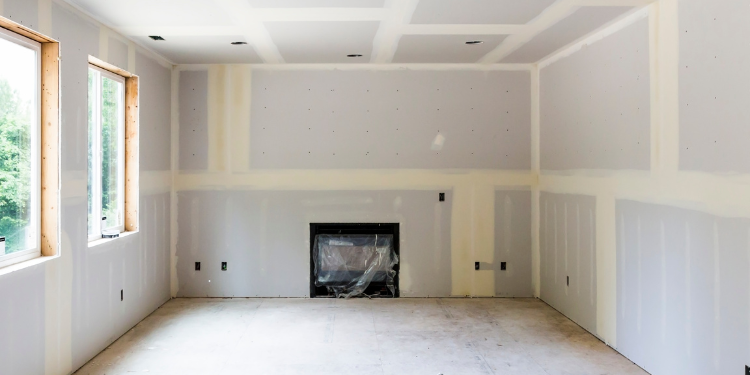
Most homeowners are surprised to learn that in many modern houses, drywall makes up nearly 80% of the visible interior surface area. That means the smoothness of your walls and ceilings, the crispness of your corners, and even how paint and décor look are all riding on how well those drywall sheets were hung, taped, and finished. Perfect drywall installation is not just a construction step; it is the canvas on which the entire interior design of your Allen, Texas home is painted.
When drywall work is done poorly, you may not notice it immediately. The real issues often emerge later: hairline cracks at joints, visible ridges under certain lighting, nail pops, and uneven textures that catch shadows in all the wrong ways. On the other hand, when drywall is installed and finished with true craftsmanship, the walls almost disappear visually, leaving behind a clean, seamless surface that makes your home feel refined and well built. At MJ Workforce Solutions in Allen, Texas, the focus is on treating drywall not as an afterthought, but as an art form that demands precision, planning, and patience.
The art of perfect drywall installation combines technical skill with a designer’s eye. It is about understanding how light will move through a room, how future finishes will react with the surface, and how to create a structure that remains stable and beautiful over time. From the first stud measurement to the final pass of sandpaper, every step plays a role in whether your walls will simply “get by” or become a long-lasting, high-quality backdrop for your life.
Planning For Flawless Walls
Perfect drywall begins long before the first sheet is lifted into place. Proper planning is the invisible foundation of a great finish. This starts with assessing the framing: are the studs straight, properly spaced, and securely fastened? Even the best drywall crew in the world cannot make a perfectly flat wall over a crooked or wavy frame. In Allen’s mix of newer developments and older homes, MJ Workforce Solutions often begins by checking for bowed studs, inconsistent spacing, and areas where additional blocking is needed to support joints or fixtures.
Accurate measurements and layout decisions are the next layer of planning. Drywall sheet size, orientation, and joint placement all affect the finished look. For example, running boards horizontally on standard-height walls can reduce the number of seams and make taping easier. Planning where butt joints will fall so they are not directly under harsh lighting or in high-visibility areas is another subtle but critical decision. A well-planned layout helps minimize weak points, reduce waste, and streamline the finishing process.
Moisture and environment must also be considered during planning, especially in Texas where humidity can fluctuate. Different rooms may require different drywall products: moisture-resistant boards in bathrooms and laundry rooms, or even special soundproofing drywall between shared walls. In Allen, where many homes feature open floor plans and high ceilings, planning for sound transmission and structural movement can prevent future cracks and noise issues. This proactive mindset is what separates a basic installation from a truly professional one.
Precision In Hanging Drywall
Once planning is complete, the physical act of hanging drywall becomes the next test of craftsmanship. Cutting and fitting each sheet demands accuracy; sloppy cuts lead to large gaps that require excessive joint compound, which in turn increases the risk of cracking and visible imperfections. Skilled installers measure twice, cut once, and ensure that every edge lines up cleanly with framing members for solid support. In tight corners, around windows, and near door openings, a few extra minutes spent on careful cuts can save hours of correction later.
Fastener placement is another crucial detail. Screws should be driven just below the surface of the paper without breaking it, and they must be spaced consistently to prevent sagging or movement. Overdriven screws weaken the board and create craters that are difficult to conceal, while underdriven screws protrude and show through the finish. MJ Workforce Solutions trains its crews to develop a rhythm and feel for the right screw depth, often using screw guns with depth settings to maintain consistency throughout an entire room.
The direction and pattern of the boards also matter. Staggering joints so they do not line up vertically from one row to the next helps create a stronger wall and reduces the chance of visible seams. Ceiling boards are often installed first and may require additional helpers or lifts for safety and accuracy, especially in the taller spaces common in Allen homes. The goal is to create a stable, well-supported surface that will not flex or shift over time, giving the later taping and finishing stages the best possible starting point.
The Craft Of Taping And Mudding
If hanging drywall is about structure, taping and mudding is about finesse. This stage is where seams, fasteners, and corners are transformed into a smooth, continuous surface. The first coat of joint compound (mud) embeds the tape, which bridges the gaps between sheets. Choosing between paper tape and fiberglass mesh depends on the specific situation, but a professional installer knows that paper tape, properly embedded, often delivers a stronger, more crack-resistant joint for standard seams.
Each coat of joint compound has a purpose. The first coat fills and secures, the second builds and smooths, and the third refines and feathers the edges out further so transitions become invisible. Rushing these steps or applying compound too thickly can lead to shrinkage, cracking, or ridges that appear when light hits the wall. In Allen’s bright, sunlit interiors, any imperfection can stand out, so crews at MJ Workforce Solutions take the time to apply thin, even coats, allowing proper drying between passes.
Knife technique is a hallmark of a seasoned drywall finisher. Wider knives are used in later coats to feather joints out more gradually, ensuring there are no abrupt transitions. Fastener heads are carefully spotted and skimmed, inside corners receive a balanced application on both sides, and outside corners are reinforced with metal or vinyl corner bead before being coated. The art lies in knowing where to build up the surface and where to remove excess, so that the finished wall feels flat to the touch and looks seamless from every angle.
Sanding, Light, And Surface Perfection
Sanding is often underestimated, but it is where drywall work either becomes flawless or falls short. The objective is not to grind away everything in sight, but to gently refine the surface, knocking down ridges and smoothing transitions without exposing tape or compromising the structure. Using the right grit of sandpaper and the correct tools—such as pole sanders for broad areas and hand sponges for corners—allows for precise control over the finish.
Lighting plays a huge role during sanding and inspection. Professional installers in Allen know that natural light from windows and doors will reveal imperfections more than overhead shop lights. That is why they often use raking light—placing a light source at a low angle—to cast shadows along the wall and highlight any remaining ridges, dips, or scratches. This step mimics the way sunlight or decorative fixtures will interact with the wall once the room is complete, ensuring that the final surface looks good under real-world conditions.
Dust control is another consideration, especially in occupied homes. Sanding generates fine particles that can travel through HVAC systems and settle on furniture. Containing dust with plastic sheeting, using vacuum-assisted sanders, and cleaning thoroughly afterward are all part of a professional approach. MJ Workforce Solutions understands that in Allen’s family homes, cleanliness and respect for the living environment are just as important as technical perfection on the walls themselves.
Textures, Finishes, And Local Style
Once the surface is smooth, the next artistic decision is texture and finish. Not every wall in Allen, Texas needs to be perfectly smooth; in fact, many homeowners prefer subtle textures like orange peel, knockdown, or light skip trowel to add character and help disguise minor imperfections. The key is consistency: an uneven or blotchy texture stands out immediately and can be more distracting than a plain, smooth wall with minor flaws.
Applying texture requires both technique and timing. Spray textures must be calibrated correctly for pressure, thickness, and pattern, while hand-applied textures demand a steady hand and an eye for uniformity. Once texture is on the wall, it often needs to be lightly knocked down or shaped before it fully sets. This window of time can be short, especially in warm Texas conditions, so crews must work efficiently and in coordinated sections to avoid visible seams in the texture itself.
After texture, primer and paint complete the transformation. A high-quality primer designed for new drywall helps seal the surface, improve paint adhesion, and reveal any last tiny imperfections that may need spot-sanding. This is also the stage where MJ Workforce Solutions can tie in related services such as decorative painting or Faux Finishing, ensuring that the underlying drywall surface supports more advanced finishes. In the end, the goal is a cohesive look that suits the home’s style, whether that is clean and modern or warm and traditional.
Why Professional Installation Matters
It can be tempting to view drywall as a DIY project or to choose the lowest bid for installation, but the hidden costs of poor workmanship often appear later. Cracks, uneven surfaces, and visible seams might not show up until after the paint is on and the furniture is in place. At that point, repairs become more disruptive and expensive than doing it right the first time. In a growing community like Allen, where property values and pride of ownership are high, investing in quality drywall work is a smart decision.
Professional crews bring not only experience, but also the right tools, materials, and processes. They understand local building codes, climate considerations, and common issues specific to North Texas homes, such as minor foundation movement that can stress joints and corners. MJ Workforce Solutions leverages this local knowledge to choose appropriate products and techniques that help walls remain stable and attractive over the long term, even as the house naturally settles.
There is also a time and stress factor. Drywall installation is physically demanding and messy, and it requires a multi-step process that must be sequenced correctly. Homeowners who attempt it themselves often find the project taking far longer than expected, with results that fall short of their vision. By trusting a professional team in Allen, you gain not only a superior finish but also peace of mind, knowing that the foundation of your home’s interior has been handled with care and expertise.
Frequently Asked Questions
How long does professional drywall installation usually take for a typical room? For an average-sized room in an Allen home, the full drywall process—from hanging to final sanding—generally takes several days. The first day is often dedicated to hanging the boards, followed by at least two to three additional days for taping, multiple coats of joint compound, and drying time between each coat. Environmental factors like humidity and temperature can affect drying times, so professionals build in flexibility to ensure each layer cures properly before moving on. Rushing this timeline can compromise the finished quality, which is why MJ Workforce Solutions emphasizes both efficiency and patience.
Why do I still see seams or lines after my walls are painted? Visible seams or lines after painting usually indicate that the joints were not feathered out far enough, or that the surface was not sanded and inspected under proper lighting. Sometimes the paint sheen itself—especially semi-gloss or gloss—can highlight minor imperfections. In some cases, inadequate priming can also cause joint compound areas to absorb paint differently than the paper surface, creating subtle lines. A professional finisher in Allen will typically inspect walls under raking light and address any irregularities before the primer and paint go on, greatly reducing the chance of visible seams.
Is smooth drywall better than textured walls? Neither smooth nor textured walls are universally “better”; it depends on your aesthetic preferences, lighting conditions, and budget. Smooth walls offer a modern, clean look but demand a higher level of perfection in finishing, which can make them more labor-intensive and costly. Textured walls, such as light orange peel or knockdown, can add visual interest and help conceal minor flaws or future touch-ups. In many Allen homes, a combination is used—smooth ceilings and subtly textured walls, for example—to balance elegance with practicality. MJ Workforce Solutions can help you select the option that best fits your style and tolerance for visible imperfections.
Can existing damaged drywall be repaired to look like new? In most cases, yes. Skilled drywall technicians can patch holes, repair cracks, replace damaged sections, and blend textures so that repairs are virtually invisible. The key is matching the existing thickness, joint structure, and texture pattern, then priming and painting correctly. Larger damaged areas may require cutting out and replacing entire sections of board, while smaller issues like nail pops or hairline cracks can often be addressed with localized repairs. In Allen, where homes may experience minor shifting due to soil conditions, having a trusted team like MJ Workforce Solutions handle repairs ensures that fixes are both cosmetic and structurally sound.
What should I do to prepare my home for drywall work? Before drywall installation or repair begins, it is helpful to clear the work area as much as possible. Move furniture away from walls, remove fragile items, and cover remaining pieces with plastic or drop cloths. Inform your contractor about any sensitive areas, such as home offices with electronics or nurseries, so extra dust control measures can be used. In Allen homes, where open floor plans are common, creating temporary barriers with plastic sheeting can help confine dust to the immediate workspace. MJ Workforce Solutions typically brings its own protective materials, but homeowner cooperation in preparing the space helps ensure a smoother, cleaner project from start to finish.