The first time a homeowner in Allen, Texas, calls MJ Workforce Solutions about their kitchen, the conversation almost always starts the same way: “My cabinets are still in good shape, but the finish looks terrible.” Maybe the stain has worn off around the knobs, or the doors near the stove are sticky and darker than the rest. The structure is solid, but the look is dated or downright tired. That is where kitchen cabinet staining steps in—not as a quick cosmetic trick, but as a deeper transformation that reveals the natural character of the wood and can completely shift the mood of the entire kitchen.
Many people assume staining cabinets is as simple as brushing on a darker color and calling it a day. In reality, cabinet staining is a careful, layered process that interacts with the specific species of wood, the existing finish, and the way you live and cook in your home. The difference between a blotchy, uneven result and a smooth, furniture-grade finish comes down to understanding how stain behaves, what prep work is truly non-negotiable, and why professional techniques matter. When you know these facts before you start, you can set realistic expectations, avoid expensive mistakes, and decide whether this is a DIY weekend project or a job better trusted to specialists like MJ Workforce Solutions in Allen.
Before sanding a single door, it helps to know what stain can and cannot do, how it ages, and how it interacts with topcoats and daily use. Kitchen cabinet staining is not just about color; it is about durability, wood protection, and long-term maintenance. The must-know facts below will help you see beyond the color swatch and make informed decisions that fit your home, your budget, and your style.
Stain vs Paint Basics
One of the first facts to understand is how staining differs from painting. Paint sits on top of the surface, forming an opaque layer that hides the wood grain entirely. Stain, on the other hand, penetrates into the wood fibers, enhancing or altering the color while still allowing the natural grain pattern to show through. This penetration is what gives stained cabinets their warm, organic character, but it also means the existing wood species, grain density, and prior finish all influence the final appearance. You are not simply covering; you are collaborating with the wood.
Because stain is semi-transparent, it cannot perfectly mask every flaw, patch, or previous repair. If your cabinets have mismatched doors, fillers, or heavy damage, paint may hide those inconsistencies more effectively. Stain will highlight differences in grain or species, and even slight variations in sanding can show up as lighter or darker patches. Homeowners in Allen often discover that stain is more honest—beautiful when the wood is in good condition, but less forgiving if the substrate is inconsistent.
Another key distinction is how each finish ages. Painted cabinets may chip or peel when the top layer loses adhesion, especially in high-moisture or heavily used areas. Stained cabinets, properly sealed with a clear protective topcoat, tend to wear more gradually, with the finish thinning over time rather than suddenly failing. This can make touch-ups and refinishing more straightforward when done correctly, but only if the original staining and sealing were performed with the right products and techniques.
Wood Species And Existing Finish
Not all cabinet woods respond to stain in the same way. Oak, with its open grain and strong pattern, takes stain readily and dramatically, often resulting in a bold, textured look that shows off every growth ring. Maple and birch, popular in many Allen homes, are much denser and can stain unevenly, leading to blotchiness if they are not properly conditioned first. Pine often absorbs stain in an unpredictable way, with darker areas around knots and softer grain that drinks in more pigment. Understanding the species is one of the most important facts before choosing a stain color or technique.
The existing finish on your cabinets also plays a major role. Many factory-finished cabinets have a tough clear coat that resists both stain and paint unless it is thoroughly deglossed and sanded or chemically stripped. Simply wiping stain over an existing finish will not give you a durable or even result. Instead, the stain may sit on the surface, dry patchy, and fail to bond. Professional crews like MJ Workforce Solutions carefully assess whether the current finish needs full removal, deep sanding, or specialized bonding products to ensure the new stain penetrates and adheres properly.
In some cases, especially with very dark existing stains or heavily damaged finishes, it may be more practical to shift from stain to a painted finish. This is where experience matters: a trained eye can tell whether your desired look is realistically achievable with stain given the wood species and current condition. Homeowners in Allen often appreciate an honest assessment that lays out both the possibilities and the limitations before any sanding begins.
Preparation Is Most Of The Work
One of the most overlooked facts about kitchen cabinet staining is that the color application itself is the shortest part of the project. Preparation—cleaning, deglossing, sanding, and masking—takes the bulk of the time. Kitchens accumulate layers of grease, cooking residue, and cleaning product buildup over the years. If these contaminants are not completely removed, they can repel stain in spots, causing fish-eyes, streaking, or adhesion problems with the topcoat. Thorough degreasing with the right cleaners and rinses is not optional; it is foundational.
After cleaning, sanding is the next critical step. Sanding does more than just roughen the surface; it levels minor imperfections, opens the wood pores for better stain absorption, and removes the existing clear coat or color where necessary. However, inconsistent sanding pressure or skipping grits can lead to uneven stain absorption. For example, sanding some areas smoother than others can cause those spots to take less stain and appear lighter. Professional teams use systematic sanding sequences and tools to maintain uniformity across all doors, drawer fronts, and frames.
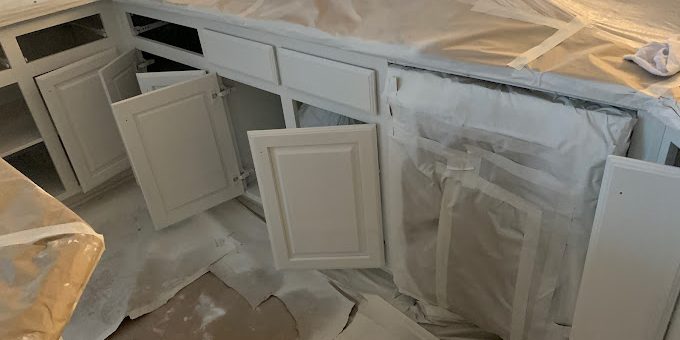
Masking and workspace setup are equally important in a lived-in home. In Allen, many kitchens are the heart of family life, so minimizing dust and disruption matters. This means setting up plastic barriers, using dust extraction where possible, labeling all doors and hardware, and creating a controlled area for drying. Rushing through prep to get to the “fun part” of staining usually leads to visible flaws that are hard to fix later. One of the clearest differences between DIY and professional staining is the amount of time and care invested in preparation.
Choosing The Right Stain And Topcoat
Another must-know fact is that not all stains are created equal, and the product you choose should match both your wood type and your lifestyle. Oil-based stains typically offer longer working time and deeper penetration, which can be helpful for achieving even color on open-grain woods. Water-based stains dry faster, have lower odor, and are often preferred in occupied homes, but they can raise the grain and require careful technique. There are also gel stains that sit more on the surface, which can sometimes help with difficult woods but require very even application.
Color choice is more than a matter of taste; it affects how visible dust, fingerprints, and wear will be. Dark espresso stains, popular in many modern kitchens, look sleek but will highlight dust and minor scratches more than medium-toned or lighter stains. Very light stains can brighten a space but may show yellowing or discoloration more quickly if the topcoat is not UV-resistant. MJ Workforce Solutions often helps Allen homeowners test sample boards under their actual kitchen lighting to see how colors shift between morning sun and evening artificial light.
The topcoat is just as important as the stain itself. Clear finishes such as polyurethane, waterborne acrylics, or conversion varnishes provide the protective barrier that stands up to cleaning, moisture, and daily use. A beautiful stain without a durable topcoat is a short-lived victory. The sheen level—matte, satin, semi-gloss, or gloss—also affects the final look and maintenance. Higher sheen levels reflect more light and can show imperfections, while lower sheens are more forgiving but may look less “furniture-like.” Choosing the right combination of stain type, color, and topcoat is what turns stained cabinets into a long-term investment rather than a temporary facelift.
Realistic Expectations And Limitations
Setting realistic expectations is another crucial fact about cabinet staining that homeowners often overlook. Stain enhances what is already there; it does not completely rewrite the story of your cabinets. If the doors are heavily warped, the frames are damaged, or the layout no longer works for your family, staining alone will not solve those issues. It is a cosmetic and protective upgrade, not a structural renovation. Knowing this upfront helps you decide whether staining is the right strategy or whether it should be paired with selective cabinet replacement or layout changes.
Color shifts also have limits. Taking very dark cabinets to a very light, natural tone is usually not possible with stain alone, because the old pigment has penetrated into the wood fibers. Even aggressive sanding and stripping may leave residual color. In many of these cases, a painted finish is the more reliable way to achieve a dramatic lightening effect. On the flip side, going from a light natural finish to a medium or dark stain is often more achievable, provided the wood is properly prepared and evenly sanded.
Another expectation to manage is that stain results can vary slightly from door to door, especially in natural woods. This variation is part of the charm of stained cabinetry, giving it a more organic, furniture-like feel. However, if you are looking for a perfectly uniform, solid-color appearance, paint may be a better match for your preferences. Professional staining aims to minimize extreme variations, but some natural differences in grain and absorption will always remain visible.
Why Professional Help Matters In Allen
While there are many DIY tutorials online, one of the most important facts about kitchen cabinet staining is that it is a high-skill finish, especially in the demanding environment of a kitchen. In Allen, Texas, where heat and humidity can fluctuate, the products and processes used must account for local conditions. Applying stain in a humid environment, for example, can extend drying times and affect how evenly the color sets. The same goes for topcoats; improper curing can lead to tacky surfaces or premature wear.
Professional teams like MJ Workforce Solutions bring not only tools and products, but also experience with different wood types, factory finishes, and repair scenarios. They know how to deal with tricky corners, intricate profiles, and details that can trap excess stain or finish. They also understand how to sequence the work—removing doors, finishing them in a controlled environment, and completing frames in-place—so that the overall project goes smoothly and the finish quality is consistent.
Beyond technique, there is also the matter of time and disruption. Staining cabinets properly is not a one-day project. It involves multiple stages of cleaning, sanding, staining, and topcoating, with adequate drying and curing time between each. A professional crew can compress that timeline with efficient workflows, while a homeowner juggling work and family may find the project stretching out far longer than expected. For many Allen homeowners, the value of hiring a specialist lies as much in reduced stress and downtime as in the superior finish.
Frequently Asked Questions
Can I stain over my existing cabinet finish without sanding? In most cases, no. Existing clear coats and factory finishes block stain from penetrating the wood. Simply wiping stain over them will lead to poor adhesion, streaking, and a finish that wears off quickly. At minimum, you need thorough cleaning and deglossing, and often you will need sanding or stripping to remove the old finish. Professional evaluators can sometimes use specialized bonding products in limited situations, but skipping surface preparation almost always results in disappointment.
How long does a professional cabinet staining project usually take? The timeline depends on the size of your kitchen, the condition of the cabinets, and the specific products used, but most professional staining projects in Allen take several days to a week. Day one is typically dedicated to cleaning, removal of doors and hardware, and initial sanding. Subsequent days involve further prep, stain application, and multiple coats of clear finish with proper drying time. Rushing this process can compromise durability, so it is important to allow enough time for each layer to cure correctly.
Will staining my cabinets increase my home’s value? While no single upgrade guarantees a specific return, freshly stained cabinets can significantly improve the perceived value and appeal of your kitchen, which is often a key selling point for buyers. A well-executed stain job that modernizes the color and showcases the wood can make an older kitchen feel more upscale without the cost of full replacement. In a competitive market like Allen, this type of improvement can help your home stand out and photograph better for listings.
How do I maintain stained kitchen cabinets? Maintenance starts with gentle cleaning habits. Use mild, non-abrasive cleaners and a soft cloth to wipe down surfaces, avoiding harsh chemicals or scrubbing pads that can dull or scratch the clear coat. Address spills and splatters promptly, especially around cooking areas and sinks. Over time, if you notice dulling in high-use zones such as around handles, a light scuff-sand and additional clear coat may refresh the finish. Regular, careful cleaning is usually enough to keep stained cabinets looking rich and vibrant for many years.
Should I choose staining or painting for a major color change? If your goal is to dramatically change the cabinet color—especially from very dark to very light or vice versa—paint may be the more predictable option. Stain works best when you are enhancing the existing wood and staying within a reasonable range of tones. For example, going from a honey oak to a walnut tone is often feasible, while going from espresso to a pale natural look is usually not. A professional consultation from MJ Workforce Solutions can help you decide whether staining, painting, or a combination of both is the right path for your specific cabinets and desired style. For those considering painted finishes as an alternative, you can explore more options through Cabinet Painting services tailored to Allen homeowners.