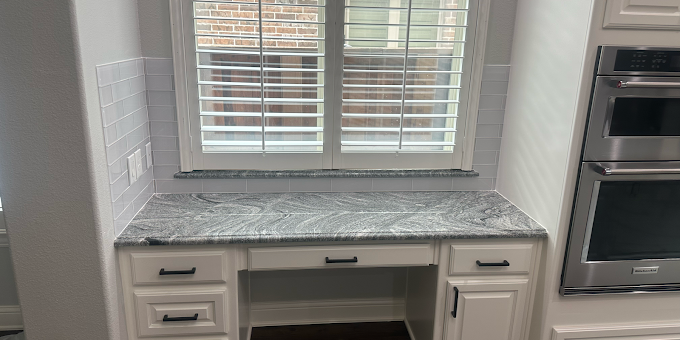
Kitchen cabinet staining has become one of the most impactful ways homeowners in Allen, Texas are updating their spaces without taking on a full renovation. Instead of ripping out perfectly functional cabinets, more people are choosing to enhance the natural beauty of the wood with modern stains and professional finishing techniques. The right stain color and application method can completely change how your kitchen feels: warmer, brighter, more contemporary, or more rustic, all while preserving the character of your existing cabinetry.
Understanding techniques and tools matters because cabinet staining is not just “wiping on some color.” Cabinets sit at eye level, they take abuse from grease, steam, and fingerprints, and they are often the focal point of an open-concept home. Any streaks, blotches, or uneven coverage will be visible every single day. That’s why the process, from surface prep to final clear coat, has to be methodical and precise. For homeowners working with a professional team like MJ Workforce Solutions in Allen, the difference between a DIY attempt and a properly executed staining project is night and day—not only in appearance, but also in how long the finish lasts.
Whether you’re considering a subtle refresh or a dramatic color shift, having a clear picture of the available staining techniques, the right tools, and the sequence of steps will help you make smart choices. Even if you plan to hire professionals, knowing what goes into cabinet staining allows you to ask the right questions, evaluate estimates, and collaborate on stain colors and finishes that truly fit your home and lifestyle.
Stain Types And Their Effects
The first big decision in kitchen cabinet staining is choosing the type of stain. Each stain formulation behaves differently on wood, absorbs at a different rate, and creates a distinct look. Traditional oil-based stains have long been popular because they penetrate deeply into the wood, highlighting grain patterns and offering rich, warm tones. They tend to provide more working time, which can be forgiving on large cabinet runs. However, they also have stronger odors and longer drying times, something to consider if you’re living in the home during the project.
Water-based stains are increasingly common in homes across Allen, Texas, especially where ventilation is limited or families prefer lower-VOC products. These stains dry faster, have less odor, and clean up with water instead of solvents. They also tend to maintain their color over time without yellowing as much as some oil-based products. The tradeoff is that they can raise the wood grain and dry so quickly that you must work efficiently to avoid lap marks or uneven coverage, which is where professional experience becomes invaluable.
There are also gel stains, which are thicker and designed to sit more on top of the wood rather than soaking deeply in. These are particularly useful when dealing with woods that blotch easily, such as pine, or when you’re trying to achieve a more uniform finish on cabinets with varying grain density. Gel stains can help create a more even appearance, but they require careful wiping and leveling to avoid a muddy look. MJ Workforce Solutions often evaluates the existing cabinet wood species and condition before recommending the best stain type so the final color is predictable and attractive.
Beyond the base stain type, you can choose between transparent, semi-transparent, and more opaque finishes. Transparent stains highlight grain patterns dramatically, ideal for high-quality hardwood cabinets. Semi-transparent options mute some of the variation while still showing character. More opaque stain-like finishes can mimic the look of a painted cabinet while still letting a hint of grain peek through—perfect if you want a softer, less “solid” look than paint but more color control than a traditional stain.
Essential Prep And Cleaning Steps
No matter how advanced your staining tools are, failing to properly prepare the cabinets will sabotage the result. Kitchen cabinets accumulate years of grease, cooking residue, and hand oils that can prevent stain from penetrating evenly. The first step is a thorough cleaning with a quality degreaser or TSP substitute. Every door, drawer front, and frame surface needs to be scrubbed, including edges, profiles, and around hardware holes. In Allen’s humid summers, airborne oils and dust can build up faster than you might expect, making this cleaning step even more critical.
Once the surfaces are clean and dry, the next task is to remove the existing finish enough to allow the new stain to bond and absorb. This usually involves sanding. For cabinets with a clear coat that’s still intact but glossy, a scuff-sand using fine-grit sandpaper (typically 180–220 grit) may be enough to de-gloss the surface. For older cabinets with peeling or heavily worn finishes, a more aggressive sanding approach or even chemical stripping might be necessary. Professional crews like MJ Workforce Solutions use a combination of sanding blocks, detail sanders, and dust extraction systems to keep dust under control and achieve consistent results.
After sanding, every surface must be vacuumed and wiped down with a tack cloth or microfiber to remove residual dust. Even tiny dust particles left on the surface can get trapped in the stain and clear coat, causing roughness or specks that catch the light. This is one area where professional process shines: labeling doors and drawers, setting up a dedicated staging area, and keeping a clean workflow are all part of achieving a furniture-grade finish on your kitchen cabinets.
For certain wood species, especially softwoods and some maples, applying a wood conditioner or pre-stain can dramatically improve the consistency of the color. These products help regulate how the wood absorbs stain, preventing blotchy or patchy areas. This step is often skipped in DIY projects, but experienced painters and finishers in Allen know that it can be the difference between a professional look and a finish that highlights every imperfection in the wood.
Application Tools And Techniques
Once the cabinets are properly prepped, the focus shifts to the actual application tools and methods. Traditional staining often involves brushes and rags, and those are still essential tools. Natural bristle brushes are typically used for oil-based stains, while synthetic bristles are better for water-based products. Brushes are ideal for working stain into detailed profiles, corners, and raised panels, while lint-free rags or staining pads are used to wipe away excess and level the color. The key is to work in manageable sections, keeping a wet edge so the stain doesn’t dry unevenly.
Foam brushes and staining pads are also popular for cabinet work because they can deliver stain smoothly without leaving bristle marks. These tools are especially useful on flat panel areas and edges. After applying stain with a pad or foam brush, a clean cloth is used to wipe off the excess, always following the direction of the wood grain. This wiping step is what defines the final color intensity; the longer the stain sits before wiping, the deeper the color will be, within the limits of the product and wood type.
For larger cabinet projects or when aiming for ultra-consistent results, some professionals incorporate spray equipment for clear coats or even for certain stain applications. Sprayers can lay down an even coat quickly and are particularly effective for topcoats like lacquer or waterborne polyurethane. However, spraying stain itself requires skill to avoid runs, shadows, and uneven absorption. In occupied homes in Allen, Texas, it also demands careful masking and ventilation, which is why it’s usually best left to trained crews with the right equipment and safety practices.
Technique matters just as much as the tool. Working with the grain, maintaining consistent pressure, timing the wipe-off, and checking for missed spots as you go all contribute to a flawless finish. MJ Workforce Solutions technicians are trained to move systematically around a kitchen, often tackling doors and drawers on horizontal workstations for better control, then addressing frames on-site. This disciplined approach reduces the risk of lap marks and ensures that color density stays consistent from one cabinet section to the next.
Choosing Colors And Sheens
Stain color selection is where style and technique intersect. In Allen homes, there’s a wide range of preferences—from deep espresso tones that anchor a modern kitchen to lighter, natural stains that fit airy, transitional designs. Darker stains can add drama and sophistication but will show dust and fingerprints more readily. Lighter stains make spaces feel larger and can be more forgiving of everyday wear. Mid-tone, warm stains often strike a balance, working well with a variety of countertop and flooring materials.
Because stain interacts with the underlying wood, color samples must be tested on the actual cabinet material or on a spare door whenever possible. The same stain color can look dramatically different on oak compared to maple or birch. Grain patterns, existing undertones, and even previous finishes that weren’t fully removed can all influence the final appearance. A professional team will typically create sample boards or test areas, letting homeowners in Allen see how the stain behaves under their own kitchen lighting, which can differ from showroom conditions.
After color comes the question of sheen for the protective topcoat. Common options are matte, satin, semi-gloss, and gloss. In busy kitchens, satin is often the sweet spot: it offers enough sheen to be easy to clean and resistant to stains, without being so shiny that it highlights every minor scratch or surface flaw. Semi-gloss provides a bit more reflectivity and durability, favored in some traditional or high-contrast designs. Matte finishes give a softer, more natural look but may require more frequent maintenance to keep them looking pristine.
Clear coat products also vary widely. Waterborne polyurethanes and conversion varnishes are popular for their durability and fast curing, especially in professional settings. Oil-based polys offer a warm glow but can amber over time. The choice of topcoat, like the stain itself, should reflect how hard the kitchen is used, the desired look, and how much maintenance the homeowner is willing to perform. MJ Workforce Solutions helps clients weigh these factors, ensuring that the stained cabinets not only look great on day one but also hold up under daily use in an active Allen household.
Common Mistakes And Professional Advantages
Many homeowners underestimate how unforgiving cabinet staining can be. One of the most common mistakes is insufficient prep: skipping thorough degreasing, rushing sanding, or failing to remove dust. The result is often adhesion problems, peeling, or a gritty feel underhand. Another frequent issue is uneven stain application, where some sections are left too wet and others wiped too aggressively, causing blotchy color. This is particularly noticeable on large, flat door panels and can be difficult to correct without stripping and starting over.
Timing errors also cause trouble. Working too slowly with a fast-drying water-based stain can leave lap marks and visible overlaps. On the flip side, leaving an oil-based stain on the surface too long before wiping can lead to a sticky, uneven film that never fully cures. Inconsistent use of wood conditioner on only some doors, or mixing stain batches improperly, can create a patchwork of subtly different tones across the kitchen. These are the kinds of issues that a homeowner might not anticipate until they see the final result in full daylight.
Hiring a professional cabinet staining team like MJ Workforce Solutions offers a number of advantages that go beyond simple labor. Experienced crews bring a tested process, high-quality tools, and familiarity with how different stain systems behave on various woods. They also understand how local climate in Allen, Texas—temperature and humidity—affects drying times and curing, adjusting their schedule and product selection accordingly. This kind of expertise is what produces consistent, repeatable results that look like factory finishes rather than weekend projects.
Professionals also manage the project logistics: setting up containment, protecting countertops and floors, labeling and storing doors, and minimizing disruption to your daily life. Because they handle staining and clear coating efficiently, the total downtime of your kitchen is typically shorter than a drawn-out DIY approach. And if you’re considering other work, such as updating trim or exterior projects like Exterior Painting, working with a full-service company in Allen means you can coordinate multiple upgrades under one roof.
Care, Maintenance, And Longevity
Once your cabinets are beautifully stained and sealed, ongoing care plays a major role in how long that finish lasts. Even the most durable topcoat will degrade more quickly if it’s regularly exposed to harsh cleaners or standing water. For daily cleaning, a soft cloth with mild, non-abrasive soap and water is usually sufficient. Avoid ammonia-based products and scouring pads, which can dull the sheen or slowly wear through the clear coat over time, especially around high-touch areas like knobs and pulls.
Heat and moisture are constant factors in any kitchen, but they are especially challenging around dishwashers, sinks, and cooktops. Over time, steam can soften finishes and invite peeling if the original staining and sealing were not done correctly. Using range hoods and vent fans, wiping up spills promptly, and keeping cabinet doors dry will all extend the life of your stained surfaces. In Allen’s climate, where humidity spikes in the warmer months, these habits are even more important.
Inevitably, minor wear will appear in heavy-use zones: a scuff from a belt buckle on a lower cabinet, a chip near a frequently used drawer, or small scratches from pets or children. One advantage of stained wood over some painted finishes is that small touch-ups can sometimes be blended with stain markers or carefully applied matching stain and clear coat. For more widespread wear, a professional light sanding and topcoat refresh may be all that’s needed, rather than a full restain, especially if the original work was done with quality products and proper technique.
Working with a professional company like MJ Workforce Solutions from the start means you can also get guidance on maintenance schedules and realistic expectations for longevity. Properly stained and sealed cabinets, maintained with care, can look great for many years, often far longer than lower-end factory finishes. This makes staining not just an aesthetic choice, but a smart investment in the long-term value and enjoyment of your Allen, Texas home.
Frequently Asked Questions
How long does a professional cabinet staining project usually take? For an average-sized kitchen in Allen, Texas, a professional staining project typically takes about 4–7 days from start to finish. The timeline includes cleaning, sanding, any necessary repairs, stain application, and multiple coats of clear finish with proper drying time in between. Larger kitchens, complex door profiles, or significant color changes can extend the schedule, but a professional crew will provide a clear timeline before work begins so you can plan around limited kitchen access.
Can any existing cabinets be stained, or are there limitations? Most solid wood cabinets can be successfully stained, but there are limitations. Cabinets with heavy laminate or thermofoil surfaces generally cannot be stained because there is no real wood for the stain to penetrate. Very dark existing finishes can be lightened, but this often requires extensive stripping and sanding, which adds time and cost. A professional evaluation from MJ Workforce Solutions will determine whether your current cabinets are good candidates for staining and what level of prep is required to achieve your desired look.
Is staining cheaper than replacing or refacing cabinets? In many cases, staining existing solid wood cabinets is more cost-effective than full replacement or even refacing, especially when the cabinet boxes are structurally sound. Replacement involves new cabinetry, potential modifications to countertops and plumbing, and more extensive labor. Refacing adds new doors and veneers over existing boxes, which can be more expensive than refinishing. Staining leverages the structure you already have, focusing budget on surface transformation rather than full reconstruction, making it an attractive option for many Allen homeowners.
Will stained cabinets hold up in a busy family kitchen? When done correctly with quality products and a durable topcoat, stained cabinets can perform very well in high-traffic, family kitchens. The key is proper prep, consistent stain application, and multiple protective clear coats. Professional finishes are designed to resist moisture, food splatters, and regular cleaning. Pairing that with simple maintenance habits—like wiping spills quickly and avoiding harsh cleaners—helps ensure the cabinets stay attractive for years, even with kids, pets, and frequent cooking.
How do I choose the right stain color for my home? Start by looking at the fixed elements in your kitchen: flooring, countertops, backsplash, and natural light. The stain color should complement these, not fight against them. In Allen, many homeowners bring inspiration photos and then work with professionals to create sample boards on the actual cabinet wood. Seeing a few candidate colors in your own space, under your lighting, is the most reliable way to choose. MJ Workforce Solutions can guide you through this sampling process, helping you narrow down options that match your style—whether that’s modern, farmhouse, traditional, or somewhere in between.