Industry studies show that as much as 70% of the durability of an exterior paint job is determined before the first coat of paint ever touches the wall. In other words, the hours spent washing, scraping, repairing, and priming your home’s exterior have a bigger impact on how long your paint will last than the actual brand of paint you choose. That surprises many homeowners in Allen, Texas, who assume a “premium paint” is a magic solution—when in reality, proper preparation is what keeps that fresh color from peeling, fading, and cracking in just a few short years.
Exterior painting preparation is not just about making the surface look clean. It is a systematic process of diagnosing the condition of your siding, trim, and other exterior elements, addressing hidden issues like moisture intrusion and failing caulk, and creating the ideal surface for new paint to adhere to. When MJ Workforce Solutions prepares a home for painting in Allen, the crew is not just getting ready to paint—they are actively protecting the structure from harsh Texas sun, seasonal storms, and daily wear. Skipping or rushing even one step can cut the life of a paint job in half.
If you are planning to repaint your home’s exterior, understanding what a thorough preparation process looks like will help you budget realistically, evaluate contractor proposals, and decide what tasks you might safely handle yourself. It also helps you spot red flags—like a painter who promises to “just spray it in a day” with minimal prep. The more you know about exterior painting preparation, the easier it is to make decisions that protect your investment and keep your Allen, Texas home looking sharp for years.
Understanding Your Exterior Surfaces
Every exterior surface on your home behaves differently under paint. Wood siding, fiber cement, stucco, brick, and metal each expand and contract at different rates, absorb moisture differently, and react uniquely to heat. In Allen, Texas, where summers are hot and humid and storms can be intense, these differences are magnified. Proper preparation starts with identifying exactly what materials you have and how they have aged over time. A one-size-fits-all approach is a recipe for inconsistent results.
Wood, for example, is especially sensitive to moisture and UV exposure. Sun-baked wood can become dry and brittle, causing paint to flake and peel. Moisture-damaged wood may show signs of rot, softness, or dark staining. Before painting, these conditions have to be addressed, often with repairs or partial board replacement. Fiber cement (such as Hardie board) has its own challenges: it is more stable than wood but can develop hairline cracks in caulked joints and around fasteners, which must be sealed to prevent water intrusion behind the boards.
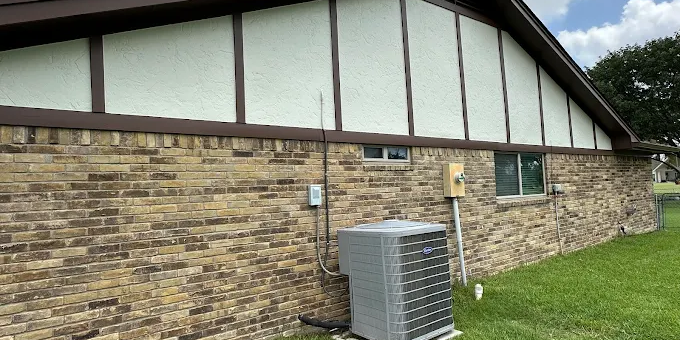
Stucco and masonry surfaces behave differently again. Stucco can develop hairline cracks, chalking, or efflorescence (a white, powdery residue caused by moisture moving through the wall). Brick and masonry need to be evaluated for old, failing coatings and moisture issues. MJ Workforce Solutions technicians are trained to recognize these subtle warning signs and choose the right preparation techniques and primers for each material type. When the unique needs of each surface are respected, the paint system can perform as intended and last its full service life.
Cleaning: The Essential First Step
No matter how good the paint is, it cannot bond properly to dirt, mildew, chalk, or loose debris. Cleaning is always the first major step in exterior painting preparation, and it is more than just a quick rinse. In North Texas, airborne dust, pollen, and pollution can cling to exterior walls, while shaded or damp areas may accumulate mildew and algae. If these contaminants are not removed, the new paint may adhere to the grime instead of the surface, leading to premature peeling or bubbling.
Professional crews often use a combination of pressure washing and cleaning solutions tailored to the specific conditions of the home. The water pressure must be carefully controlled: too low and the cleaning is ineffective; too high and you can damage siding, force water behind the walls, or scar softer materials. In Allen, where many homes are built with a mix of brick and siding, MJ Workforce Solutions takes care to adjust equipment and techniques so each surface is cleaned thoroughly but safely.
Cleaning is also the stage where potential trouble spots become more visible. Once the layer of grime is gone, issues like hairline cracks, soft wood, failing caulk, and chalky old paint stand out more clearly. This allows for a more accurate assessment of what repairs and prep steps are needed next. Homeowners sometimes underestimate how crucial this cleaning phase is, but skipping it or doing it poorly can undermine every other step in the preparation process.
Assessing Damage and Making Repairs
After the exterior is clean and dry, the real inspection begins. This is when a professional painter methodically walks the property, looking for peeling paint, cracked or missing caulk, wood rot, rust, nail pops, and other structural or cosmetic issues. The goal is not just to find anything that looks bad today, but to identify conditions that could cause the new paint to fail tomorrow. In Allen, where temperature swings and storms are common, even small vulnerabilities can quickly become larger problems.
Wood rot is one of the most serious issues discovered during this phase. Rotten sections cannot be “saved” with paint; they must be removed and replaced or properly repaired with suitable epoxy products. Simply painting over rotted wood traps moisture and accelerates decay. Similarly, any rusted metal areas need to be sanded, treated with rust-inhibiting primers, and sometimes patched. MJ Workforce Solutions takes these repairs seriously, because a paint job is only as sound as the surface it covers.
Caulk and sealants are another critical piece of the puzzle. Over time, caulk around windows, doors, trim, and siding joints can dry out, crack, or pull away from the substrate. This not only looks bad but allows water to penetrate behind the paint film and into the building envelope. Proper preparation includes cutting away failed caulk, cleaning the joint, and re-caulking with high-quality, paintable products. Done correctly, this step improves both the appearance and energy efficiency of your Allen home.
Scraping, Sanding, and Dealing with Old Paint
Once repairs are identified and underway, attention turns to the existing paint. Any loose, flaking, or blistered paint must be scraped away to create a stable surface. This can be a labor-intensive process, especially on older homes with multiple layers of paint. The goal is not necessarily to remove every last bit of old paint, but to ensure that what remains is firmly adhered. If you can slide a putty knife under an edge, it has to go. Leaving compromised paint in place is one of the main reasons new coatings fail prematurely.
After scraping, sanding comes into play. Sanding smooths the transitions between bare spots and intact paint, feathers rough edges, and scuffs glossy surfaces so the new paint can grip better. Different grits and tools are used depending on the material and condition. For example, fine sanding sponges might be used on trim and detailed areas, while power sanders might be used on broad siding surfaces. In Allen’s climate, where sun can quickly bake surfaces, creating a uniform profile for paint adhesion is essential.
On older properties, there is an added concern: the possibility of lead-based paint. Homes built before 1978 may have lead in one or more layers of paint. Professional contractors like MJ Workforce Solutions are familiar with EPA guidelines and safe work practices for dealing with potential lead hazards, including containment and cleanup methods. Homeowners should be cautious about aggressive DIY scraping or sanding if they are unsure about the age and composition of their existing paint, as improper handling can create health risks.
Priming and Choosing the Right Products
Primer is often misunderstood or overlooked, but it is a crucial bridge between the prepared surface and the finish paint. A good primer improves adhesion, seals porous materials, blocks stains, and evens out the surface so the topcoat can perform at its best. Different substrates and conditions call for different primers: bare wood, patched areas, chalky surfaces, rusted metal, and stained spots may each require a specialized product. In the variable weather of Allen, Texas, these choices are especially important for long-term performance.
For example, bare wood generally needs a high-quality bonding primer that penetrates and seals the fibers, reducing the risk of tannin bleed and improving adhesion. Masonry and stucco may call for masonry-specific primers that handle alkalinity and efflorescence. Stain-blocking primers are used over water stains, smoke damage, or heavy discoloration that might otherwise bleed through lighter colors. MJ Workforce Solutions evaluates each section of the home and selects primers accordingly, rather than relying on a single “universal” product for everything.
Timing and conditions also matter. Primers and paints have manufacturer-recommended temperature and humidity ranges for application and curing. In Allen’s hot summers, painting in direct midday sun can cause the paint to dry too quickly, leading to lap marks and poor adhesion. A professional crew schedules work to avoid the worst heat, monitors weather forecasts, and allows proper drying times between coats. This disciplined approach ensures that both primer and topcoat have the best chance to cure properly and deliver their full protective value.
Planning, Protection, and Worksite Setup
Exterior painting preparation is not only about the walls themselves. A well-executed project also involves careful planning and protection of the surrounding areas—landscaping, walkways, windows, fixtures, and neighboring properties. Before any scraping, sanding, or spraying begins, professional painters take the time to mask windows and doors, cover plants and hardscapes, and move or protect outdoor furniture and decorative items. This reduces cleanup time and prevents accidental overspray or damage.
Worksite organization is another often-overlooked aspect. Ladders and scaffolding must be set up safely and moved methodically as the project progresses. Tools and materials need to be staged so they are accessible without cluttering walkways or posing hazards. MJ Workforce Solutions trains its crews to maintain neat, orderly job sites in Allen neighborhoods, respecting property lines, driveways, and shared spaces. This level of organization not only keeps everyone safer but also contributes to a smoother, faster project.
Communication with the homeowner is part of preparation too. Before work begins, it is helpful to review the project scope, discuss colors and finishes, confirm which areas will be painted, and clarify expectations about noise, access, and daily cleanup. When you work with a professional team, you should know what will happen on each day of the project—from washing and repairs to priming and final coats. This clarity helps you plan around the work and ensures there are no surprises along the way.
Frequently Asked Questions
How long should proper exterior preparation take before painting? The timeline varies based on the size and condition of your home, but thorough preparation usually takes at least as long as the painting itself—and sometimes longer. For a typical single-family home in Allen, Texas, cleaning, repairs, scraping, sanding, caulking, and priming can span several days. If a contractor promises to start and finish everything in a single day, it is a sign that important prep steps may be rushed or skipped. MJ Workforce Solutions builds realistic schedules that prioritize durable results over speed alone.
Can I do some of the preparation myself to save money? Homeowners can handle certain tasks, such as moving outdoor furniture, trimming plants away from the house, or even a light garden-hose rinse in advance. However, key preparation steps like detailed cleaning, scraping, sanding, repairs, and priming are best left to professionals with the right tools and safety training. In particular, dealing with potential lead paint, working at heights, and diagnosing hidden damage are not ideal DIY projects. Often, the most cost-effective approach is to let a professional crew like MJ Workforce Solutions manage the full preparation process to avoid costly do-overs.
How does Allen, Texas weather affect exterior painting prep? North Texas weather influences both what preparation is needed and when it can be done. Heat, sun, and sudden storms all play a role. Prolonged sun exposure can dry out caulk and wood, leading to more repairs. Humidity and rain can cause mildew and moisture-related issues that must be addressed before painting. Scheduling also matters: professionals avoid painting on days with extreme heat, high winds, or imminent rain. A local company familiar with Allen’s climate patterns can plan prep and painting phases to take advantage of optimal weather windows.
Is priming always necessary if I am using a high-quality paint? Even the best exterior paints are not designed to replace primer in all situations. While some “paint and primer in one” products can work on previously painted, sound surfaces, they are not a cure-all. Bare wood, patched areas, stained sections, chalky surfaces, and metal generally require dedicated primers for reliable adhesion and stain blocking. Skipping primer on these areas can lead to peeling, uneven sheen, or discoloration. MJ Workforce Solutions evaluates each part of your exterior and uses primer strategically where it will make the biggest difference.
What else should I consider before starting an exterior painting project? In addition to preparation steps, think about color selection, finish sheen, and how the new paint will coordinate with roofing, stone, and landscaping. It is also smart to address related projects first, such as replacing damaged siding, upgrading trim, or completing any necessary Wallpaper Removal inside before exterior work begins, so dust and debris do not affect your fresh paint. Finally, choose a contractor with a proven track record in Allen, Texas, clear communication, and a commitment to thorough prep. When preparation is done right, your exterior paint job becomes a long-lasting shield as well as a major boost to curb appeal.