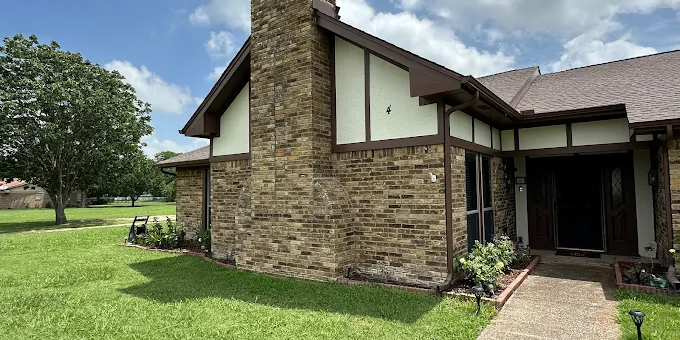
Most homeowners treat exterior paint like a one-time event: you choose a color, hire a painter, enjoy the fresh look, and then forget about it until peeling, fading, or cracking becomes too obvious to ignore. That mindset is exactly what shortens the life of your paint job and forces you into costly repaints years earlier than necessary. Exterior painting maintenance for longevity is not about constant repainting; it is about smart, consistent, light-touch care that keeps the original coating doing its job for as long as possible.
In a place like Allen, Texas, where the sun is strong, storms can be intense, and temperature swings are common, exterior paint is under constant attack. UV rays break down pigments and binders, moisture works its way into tiny gaps, and wind-driven dust and pollen slowly erode the surface. MJ Workforce Solutions sees the fallout from this every season: homes that look 15 years old after just 7 or 8 years because basic maintenance was ignored. With a simple, structured approach to caring for your exterior paint, you can dramatically extend its lifespan, protect your siding and trim, and keep your home looking sharp without constantly starting over.
Exterior painting maintenance is really about three things: prevention, early detection, and timely intervention. Prevention means creating conditions where paint can perform at its best; early detection means spotting small issues before they become big failures; and timely intervention means handling touch-ups and repairs with the right products and techniques. When these three elements work together, your exterior paint can last years longer than average, especially when it was professionally applied in the first place by a team that understands local conditions like MJ Workforce Solutions does in Allen, Texas.
Understanding How Paint Really Fails
To maintain exterior paint effectively, you need to understand what actually makes it fail. Most people assume paint just “wears out” over time, but the truth is more specific. Sunlight breaks down the resin that binds the pigment, causing chalking, fading, and eventually a brittle surface that can crack. Moisture penetrates any weak points, such as hairline gaps around windows, unsealed nail heads, or open joints in trim, and that moisture can push paint off from behind or lead to mildew and rot. Dirt, pollution, and organic growth like algae or mildew sit on the surface, holding moisture against the paint film and slowly degrading it.
In Allen, Texas, the combination of high summer heat and occasional severe storms is particularly hard on paint. The siding and trim expand and contract with temperature changes, and if the paint is already weakened or too brittle, it can no longer flex with the material underneath. That is when you see cracking, alligatoring, or flaking. On the other side, sudden heavy rains can drive water into unsealed cracks and joints, especially on windward sides of the house. MJ Workforce Solutions regularly inspects homes where the primary problem was not the paint itself, but the failure of caulking and sealants that allowed water to attack the paint system from behind.
Another overlooked factor is the original surface preparation and product choice. If a previous paint job was done with low-quality products or poor prep, it will be more vulnerable to failure, even if you maintain it. However, maintenance still matters: you can stabilize and prolong a marginal paint job with diligent care, and you can make a high-quality paint job last exceptionally long. Understanding these mechanisms of failure allows you to tailor your maintenance to the real threats your home faces, rather than guessing or waiting until it is obviously too late.
Seasonal Inspection Routine
One of the most powerful tools for extending the life of your exterior paint is a simple, consistent inspection routine. This does not require specialized equipment; it simply requires you to walk around your home with a careful eye two to three times a year. In Allen, Texas, a smart schedule is to inspect in early spring, mid-summer, and late fall. Each season brings different stressors, and catching the results early is key. MJ Workforce Solutions often helps homeowners set up this routine and shows them exactly what to look for during a walk-through.
During your inspection, start at the top and work your way down. Look at fascia boards, soffits, and trim around the roofline for peeling, cracking, or dark spots that might indicate moisture. Check around windows and doors for gaps in caulking, peeling paint at corners, and any discoloration or soft spots in the wood. Move to siding panels, paying attention to the bottom edges where water can collect, and then down to the foundation line, where splashback from rain can lead to premature wear. Take note of any areas that seem to be aging faster than others; these are often areas that need extra attention in your maintenance plan.
Do not forget the less visible sides of your home. The north side may show more mildew and algae due to less sun exposure, while the south and west sides in Allen often suffer more from UV damage and fading. Use your hands as well as your eyes: lightly run your fingers along the paint surface to feel for chalking (a powdery residue) or roughness that might indicate early breakdown. If you are not comfortable climbing ladders or inspecting upper levels, this is where a professional like MJ Workforce Solutions can provide a more thorough inspection, especially before storms season or after major weather events.
Cleaning: The Most Underrated Maintenance Task
Regular cleaning is one of the simplest and most effective ways to extend the life of exterior paint, yet it is often overlooked. Dust, pollen, mold spores, and pollution accumulate on painted surfaces, especially in a suburban environment like Allen, Texas where landscaping, construction, and traffic all contribute to airborne particulates. When these contaminants sit on the paint, they trap moisture, promote mildew, and gradually abrade the surface. A gentle wash can remove these threats and restore the paint’s ability to shed water and breathe properly.
Cleaning does not mean blasting your home with a high-pressure washer, which can actually do more harm than good by forcing water behind siding or into joints. Instead, aim for a low-pressure rinse combined with a mild cleaning solution. For most painted surfaces, a mixture of water and a small amount of exterior-safe detergent, applied with a soft brush or sponge, is effective. Rinse thoroughly from top to bottom to avoid streaks. For mildew or algae, especially on the north side or shaded areas, a cleaner formulated to treat organic growth is helpful, and it should be used according to the manufacturer’s directions to avoid damaging the paint.
In the Allen climate, an annual cleaning is usually sufficient for most homes, though properties near busy roads, construction zones, or heavy tree coverage may benefit from twice-yearly washing. MJ Workforce Solutions often incorporates cleaning into a broader maintenance plan, especially before touch-up painting. A clean surface allows you to accurately assess the condition of the paint and ensures that any touch-up coatings adhere properly. Skipping cleaning and painting over dirt or mildew is a common mistake that shortens the life of both the old and new paint.
Caulking, Sealing, and Small Repairs
Even the best paint cannot compensate for failed caulking or neglected minor damage. Gaps around windows, doors, trim joints, and siding seams are prime entry points for water. Once moisture gets behind the paint film, it can cause bubbling, peeling, and even structural damage to the underlying material. A core part of exterior painting maintenance for longevity is routine inspection and renewal of caulking and sealants. In Allen, Texas, where heat and sun can dry out and crack caulk faster than in cooler climates, this step is especially critical.
Focus on checking the flexible joints: where trim meets siding, at inside and outside corners, and around penetrations such as vents, cable lines, and hose bibs. If you see caulk that has cracked, pulled away, or become brittle, it needs to be removed and replaced. Use a high-quality, exterior-grade, paintable caulk designed for the specific materials involved (for example, a different product may be needed for fiber cement siding than for wood). Applying new caulk to clean, dry surfaces ensures a strong bond and a watertight seal. Once cured, the new caulk should be painted to protect it from UV exposure.
Small repairs are just as important. Replace or repair any rotted wood, damaged trim, or cracked siding before it spreads. Scrape away loose or peeling paint, sand the edges smooth, and spot-prime bare areas with an appropriate exterior primer before touching up with finish paint. Many homeowners skip primer on spot repairs, but that shortcut often leads to premature failure in those areas. MJ Workforce Solutions emphasizes proper patching and priming because these small details dramatically influence how long a paint system will last, especially around vulnerable areas like window sills and door frames that see more water and sun.
Smart Touch-Ups and When to Repaint
Touch-ups are a powerful tool when done correctly, but they can also create a patchy, uneven appearance if approached casually. The goal is to preserve the integrity of the paint film and protect vulnerable areas, not to create a patchwork of mismatched shades. Start by keeping a record of the paint products used on your home: brand, sheen, color, and batch if possible. MJ Workforce Solutions provides this information to homeowners in Allen so that future maintenance and touch-ups can match as closely as possible.
When you identify localized wear, such as a sun-baked section of trim or a high-traffic area near doors, treat it as a mini-project. Clean the area thoroughly, address any caulking or surface defects, spot-prime bare spots, and then apply touch-up paint. Feather the edges into the surrounding area rather than stopping abruptly at a straight line in the middle of a board. On surfaces that have already faded some, a perfect color match is unlikely, but careful blending minimizes visual differences. In some cases, repainting an entire section (for example, all trim on one elevation) yields a more uniform appearance than isolated touch-ups.
There comes a point, however, when touch-ups are no longer enough and a full repaint is the smarter choice. Signs include widespread chalking, significant fading, multiple areas of peeling or cracking, or when more than about 20–30% of the surface would need touch-up. In the Allen climate, a high-quality exterior paint job can often last 8–12 years with good maintenance, sometimes longer, but lower-quality jobs may need repainting sooner. A professional assessment from a team like MJ Workforce Solutions can help you decide whether your home is a candidate for continued maintenance or if you are better served by a comprehensive repaint that resets the clock and gives you a fresh, durable coating to maintain.
Planning a Long-Term Maintenance Strategy
Longevity is rarely the result of random, occasional efforts; it comes from a plan. Exterior painting maintenance should be approached like a schedule for your HVAC service or roof inspections. Instead of waiting for problems to demand attention, you map out when you will inspect, clean, caulk, and touch up. For homeowners in Allen, Texas, integrating this plan with the local weather patterns makes it more effective: schedule major tasks for milder seasons, avoid the peak of summer heat for painting, and check for storm damage after severe weather.
A basic maintenance plan might include an early spring inspection and cleaning, a midsummer check for UV-related issues, and a late fall review of caulking and vulnerable areas before winter. Keep notes each time: where you saw early wear, what products you used, and any areas that may need extra attention next time. Over a few years, patterns emerge. You may notice that the west-facing gable always ages faster or that trim near sprinklers shows more wear. With this information, you can proactively reinforce those areas, perhaps with higher-performance products or more frequent touch-ups.
Many homeowners prefer to partner with a professional painting company to handle this maintenance plan. MJ Workforce Solutions, for example, can perform periodic inspections, cleaning, and targeted repairs, ensuring that each step is done to a high standard. This partnership is especially valuable for multi-story homes, complex architecture, or homeowners who simply do not have the time or desire to manage ladders, tools, and materials. Regardless of whether you DIY parts of the plan or rely fully on professionals, the key is consistency and attention to detail. That is what truly extends the life of your exterior paint and protects your investment in your Allen home.
Frequently Asked Questions
How often should I repaint the exterior of my home in Allen, Texas? The ideal repaint cycle depends on the quality of the previous paint job, the products used, and how well the surface has been maintained. In Allen, a high-quality exterior paint applied over properly prepared surfaces can often last 8–12 years or more with regular maintenance. Lower-quality paints or poorly prepared surfaces may need repainting in as little as 5–7 years. Regular inspections, cleaning, and touch-ups by a professional like MJ Workforce Solutions can extend the time between full repaints by addressing small issues before they become widespread failures.
Is pressure washing safe for my exterior paint? It can be, but only when done correctly and with the right equipment and settings. High-pressure washing at close range can damage paint, force water behind siding, and even etch wood or fiber cement surfaces. For most homes, a low-pressure wash combined with appropriate cleaners is safer and more effective for maintaining paint. Professionals in Allen, Texas understand how local dust, pollen, and organic growth behave and can choose methods that remove contaminants without harming the paint film. If you are unsure, it is wise to consult or hire a professional rather than risk damaging your exterior.
What are the biggest signs that my paint is failing and needs attention? Early signs include chalking (a powdery residue on your fingers when you touch the paint), noticeable fading, or small cracks and gaps in caulking. As failure progresses, you may see peeling, flaking, or bubbling paint, especially around windows, doors, and trim edges. Dark spots, soft wood, or mildew growth can indicate that moisture is getting behind the paint film. When you notice these signs, prompt maintenance is important. Small issues can often be resolved with cleaning, caulking, spot-priming, and touch-up paint, but widespread problems may signal that a full repaint is approaching.
Can touch-up paint really blend in with older paint? Touch-up paint can blend reasonably well when the original paint has not faded significantly and when the same product and color are used. However, all exterior paints fade over time, especially under the Texas sun, so a perfect match is not always possible. Techniques like feathering edges, repainting entire boards or trim sections rather than tiny spots, and using leftover paint from the original job can improve the appearance. MJ Workforce Solutions often advises homeowners whether a given area is suitable for touch-up or whether repainting a larger section will yield a more uniform and attractive result.
Should I handle exterior maintenance myself or hire a professional? It depends on your comfort level, time, tools, and the complexity of your home. Many homeowners in Allen, Texas are comfortable with basic inspections and light cleaning at ground level, but are less comfortable working on ladders, handling caulking correctly, or dealing with higher elevations and intricate details. A professional like MJ Workforce Solutions brings not only the right equipment and safety practices, but also the experience to spot subtle issues and choose the right products for long-term performance. Some homeowners adopt a hybrid approach: they handle simple tasks and rely on professionals for more technical or risky work, which can be an effective balance between cost and quality.
By treating exterior painting maintenance as an ongoing, manageable process rather than an occasional emergency, homeowners in Allen, Texas can significantly extend the life of their paint, keep their homes looking sharp, and protect their underlying siding and trim. Whether you tackle it yourself or partner with a professional team like MJ Workforce Solutions, a thoughtful maintenance plan is one of the smartest investments you can make in your home’s exterior. For related surface projects, including specialty coatings, you can explore services like Floor Painting as part of a comprehensive approach to your property’s finishes.