Most homeowners are surprised to learn that the paint finish on an exterior wall can change how long that paint job lasts by several years. The same color in a flat finish versus a satin or semi-gloss can weather, fade, and even peel at dramatically different rates, especially under the intense Texas sun. In a place like Allen, Texas, where heat, humidity, and sudden storms are normal, choosing the wrong finish for exterior painting can mean repainting far sooner than you planned.
When people think about exterior paint, they often focus first on color: which shade will look best with the roof, the landscaping, or the neighboring homes. But professional painters know that the finish is just as important as the color itself. The sheen you choose affects how the surface handles dirt, moisture, UV rays, and everyday wear. It influences how your home looks in bright sunlight, how easy it is to clean, and even how flaws in your siding or trim will appear. At MJ Workforce Solutions, serving Allen and the surrounding communities, finish selection is a critical step in every exterior project, not an afterthought.
Understanding how finishes behave in real-world conditions is the key to getting an exterior paint job that looks fresh, resists the elements, and protects your home for as long as possible. Instead of guessing between flat, satin, or semi-gloss, it helps to break down how each one performs on different surfaces and under different conditions. With the right guidance, you can match each part of your home’s exterior to the finish that will make it both beautiful and durable.
Why Exterior Finish Matters
The finish of your exterior paint is essentially the balance between resin, pigment, and additives that determines how shiny or matte the surface appears once it dries. But sheen is more than a visual effect; it is directly tied to performance. Glossier finishes contain more binders, which typically makes them more durable and more resistant to moisture and stains. Flatter finishes contain more pigment and less binder, leading to a softer look that hides imperfections but may be less scrubbable and slightly more vulnerable to weathering.
In Allen, Texas, where UV exposure is intense for much of the year, the finish you choose also affects how your color ages over time. Some sheens will show chalking, fading, or uneven weathering more quickly than others. A flat finish, for example, can look velvety at first but may start to show wear sooner on highly exposed walls. Satin or low-sheen finishes, by contrast, often offer a good balance between appearance and resilience, especially for large wall areas that face direct sunlight for several hours a day.
Another reason finish matters is maintenance. Homes in North Texas deal with dust, pollen, and occasional heavy rains that splash mud and debris onto lower walls and trim. A surface painted with a washable, slightly glossy finish will generally be easier to clean with a gentle rinse or mild soap and water. Choosing the right finish with MJ Workforce Solutions means planning not just for how the house will look on day one, but how it will look after several seasons of storms, heatwaves, and windy days.
Understanding Exterior Sheen Options
Exterior paint finishes typically range from flat/matte to high-gloss, with several options in between. Each has a distinct role, and understanding these roles can prevent costly mistakes. Flat or matte finishes have very little sheen and provide a soft, non-reflective appearance. They are excellent at concealing surface imperfections, such as patched areas, minor cracks, or uneven textures. However, they are usually less resistant to stains and can be more challenging to clean without leaving marks.
Eggshell and satin finishes occupy a middle ground that many professionals prefer for exterior walls. They have a slight sheen that becomes more noticeable when light hits at an angle, giving the surface a subtle, refined look. These finishes are generally more durable and easier to clean than flat paints while still doing a good job of minimizing minor flaws. In a climate like Allen’s, where dust and pollen can collect on surfaces, this balance between appearance and cleanability often makes satin or low-sheen finishes the go-to choice for siding.
Semi-gloss and gloss finishes are typically reserved for trim, doors, shutters, and other accents. Their higher sheen levels highlight architectural details and provide strong resistance to moisture and dirt. On the downside, they tend to emphasize surface imperfections and can show brush marks or uneven prep work more clearly. This is where professional preparation and application from a team like MJ Workforce Solutions becomes crucial. When used correctly, these higher sheens create crisp, eye-catching details that set off the rest of the home beautifully.
Matching Finish To Surface And Material
Not every exterior surface on your home should receive the same finish. Different materials respond differently to weather, expansion and contraction, and daily wear. For example, fiber cement siding and well-prepped wood siding often look and perform best with a satin or low-sheen finish. This level of sheen helps repel moisture and dirt while still allowing the natural texture of the siding to show through without too much glare. In Allen, where siding can be exposed to direct sun and driving rain, this combination can significantly extend the life of the paint job.
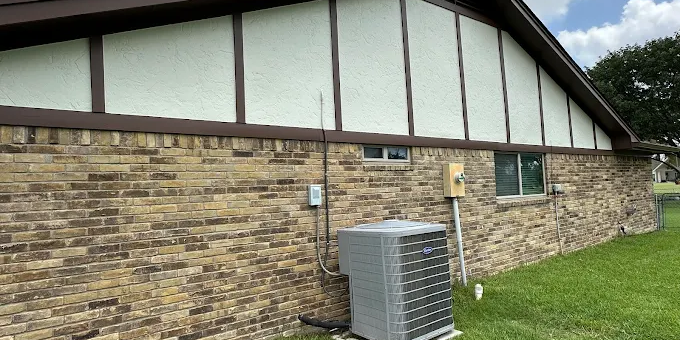
Stucco and masonry surfaces present a different challenge. These substrates often have more pronounced texture and can develop hairline cracks over time. A flat or low-sheen finish is often recommended to help mask these imperfections and avoid highlighting uneven patches. At the same time, you still want a product that can handle moisture and resist mildew. Working with an experienced exterior painting contractor in Allen ensures that your stucco or brick receives a finish that balances aesthetics with long-term durability, especially around areas prone to water runoff or splash-back.
Trim, doors, and shutters generally benefit from a semi-gloss or gloss finish because these areas are subject to frequent contact, such as opening and closing, and often need regular cleaning. Glossy finishes stand up better to this kind of use and can be wiped down more easily. On wooden doors and detailed trim, a higher sheen also highlights craftsmanship and adds visual depth. MJ Workforce Solutions often recommends varying the sheen between walls and trim to create a subtle contrast that makes the exterior look more refined and intentional.
Climate, Sun, And Local Conditions
Allen, Texas, sits in a region where summers are hot, sunlight is strong, and storms can be sudden and intense. These conditions place unique demands on exterior finishes. UV radiation can break down pigments and binders over time, leading to fading, chalking, and loss of sheen. Some finishes tend to lose their luster more quickly under strong sun, while others hold their appearance longer. Satin and low-sheen finishes often perform well in this regard, maintaining a consistent look even as they slowly weather.
Humidity and temperature swings also play a role. When the air is moist, lower parts of the exterior are more prone to mildew and staining, especially on shaded sides of the house. A finish that resists mildew and is easy to clean becomes critical in those areas. Semi-gloss and gloss products, with their tighter surface, can be more resistant to moisture penetration and biological growth, making them a smart choice for trim near the ground, fascia boards, and window sills that may see frequent water exposure.
Wind-borne dust and pollen are common in North Texas, and these particles can cling to rough or porous finishes more easily. A very flat finish on a highly exposed wall may hold onto grime, making the house look dingy sooner. Meanwhile, a slightly smoother satin finish makes it easier for rain to rinse away dirt or for a homeowner to gently hose off the surface. MJ Workforce Solutions takes these local conditions into account when advising Allen homeowners, because the right finish in this climate is not necessarily the same as in cooler, less sunny regions.
Balancing Aesthetics With Practical Needs
While performance is critical, appearance still matters. The finish you choose can dramatically change the character of your home’s exterior, even if the color stays the same. A flat finish tends to make colors appear deeper and more uniform, giving a classic, understated look. This can be ideal for older homes or for neighborhoods where a more traditional style is common. However, it can also make surfaces feel a bit heavy or dull if overused, especially on very large, flat walls.
Satin or eggshell finishes add a gentle, refined sheen that interacts with sunlight throughout the day. In morning or evening light, these finishes can make the color appear richer and more dimensional without turning the surface shiny. Many modern homes in Allen use this type of finish on siding to achieve a clean, updated look that still feels welcoming. When combined with slightly glossier trim, the overall effect is layered and intentional, drawing the eye to architectural details without overwhelming the viewer.
For front doors and accent features, semi-gloss or gloss can be a powerful design tool. A richly colored door with a higher sheen becomes a focal point, especially when contrasted against a more subdued wall finish. That said, too much gloss on large surfaces can create glare and emphasize imperfections in the substrate. This is why professional painters carefully control where higher-sheen products are applied. MJ Workforce Solutions helps Allen homeowners find that sweet spot where beauty and practicality align, ensuring that each finish choice supports both curb appeal and long-term maintenance goals.
Professional Application And Long-Term Maintenance
Even the best finish choice can underperform if the surface is not prepared correctly or if the paint is applied improperly. Higher-sheen finishes, in particular, are unforgiving of poor prep work. Any sanding marks, patch lines, or uneven caulking can become more visible once the paint dries. Proper cleaning, scraping, sanding, priming, and caulking are essential steps before applying any finish, but they are especially critical when using satin, semi-gloss, or gloss products on exterior surfaces.
Application technique also matters. The number of coats, the thickness of each coat, and the consistency of coverage all affect how the finish looks and lasts. Uneven application can cause patchy sheen, where some areas appear glossier or duller than others. Professional crews, like those at MJ Workforce Solutions in Allen, use high-quality tools and proven methods to ensure that the selected finish performs as intended. This includes paying attention to temperature and humidity during painting, which can influence how the finish cures.
Once the job is complete, simple maintenance habits can extend the life of your exterior finish. Gently rinsing walls and trim periodically to remove dust and pollutants, trimming back vegetation that rubs against painted surfaces, and addressing small chips or cracks promptly all help preserve the integrity of the finish. By choosing an appropriate sheen for each area of your home, you make these maintenance tasks easier and more effective, reducing the frequency of full repaints and keeping your home in Allen looking its best year after year.
Frequently Asked Questions
Which finish is best for most exterior siding in Allen, Texas? For most exterior siding in Allen, a satin or low-sheen finish is often the best choice. It offers a strong combination of durability, ease of cleaning, and attractive appearance under bright sun. Satin finishes help resist moisture and dirt while still doing a good job of minimizing small surface flaws. Flat finishes can be used in some cases, especially on very rough or imperfect surfaces, but they may require more frequent maintenance. MJ Workforce Solutions typically recommends satin for most siding projects unless specific conditions suggest otherwise.
Should I use the same finish on walls, trim, and doors? Using the same finish everywhere is rarely ideal. Walls, trim, and doors serve different functions and experience different levels of wear and exposure. Walls usually benefit from a satin or low-sheen finish that balances appearance with durability. Trim and doors, which are touched frequently and need more cleaning, typically perform better with semi-gloss or gloss finishes. This contrast in sheen also enhances your home’s visual appeal by highlighting architectural features. A professional painter can help you map out which finishes belong on each surface for the best overall result.
Will a glossier finish always last longer than a flat finish? Glossier finishes generally have more binders, which can improve durability and resistance to moisture and stains, but that does not automatically mean they are the best choice in every situation. On large, imperfect surfaces, a high-gloss finish can accentuate flaws and may not look attractive, even if it is technically durable. In addition, extremely glossy finishes can sometimes show surface dirt and streaks more readily. The goal is to select the finish that provides enough durability for the conditions while still looking appropriate for the surface. In many residential exteriors, satin or semi-gloss used strategically will outperform a one-finish-fits-all approach.
How does the Texas sun affect different exterior finishes? The strong Texas sun accelerates the breakdown of pigments and binders in all exterior paints, but some finishes show the effects more quickly than others. Very flat finishes can start to look chalky or faded sooner on highly exposed walls, while some glossier finishes may lose their sheen unevenly if not applied correctly. Satin finishes often weather more gracefully, maintaining a consistent appearance longer. Quality paint products designed for high-UV environments, combined with the right finish selection, are essential in Allen. Working with experienced painters ensures that both the paint and the finish are suited to local conditions.
Can I change the finish without changing the color? Yes, you can absolutely keep the same color and change only the finish. This is a common strategy when homeowners in Allen want to refresh their home’s look without a dramatic color shift. For example, repainting siding in the same shade but moving from flat to satin can make the exterior look cleaner and more modern while improving durability and washability. However, because sheen affects how we perceive color, the same color in a different finish may appear slightly lighter or darker. A professional can provide samples so you can see how the new finish will look in your home’s natural light before committing.
Choosing the right exterior finish is not just a technical decision; it is a practical and aesthetic investment in your home. If you are planning a repaint in Allen, Texas, and want expert guidance on finishes, surfaces, and long-term performance, MJ Workforce Solutions can help you navigate every option. For related home improvement services in the area, you can also explore Wallpaper Installation as part of a broader plan to update and protect your living spaces inside and out.